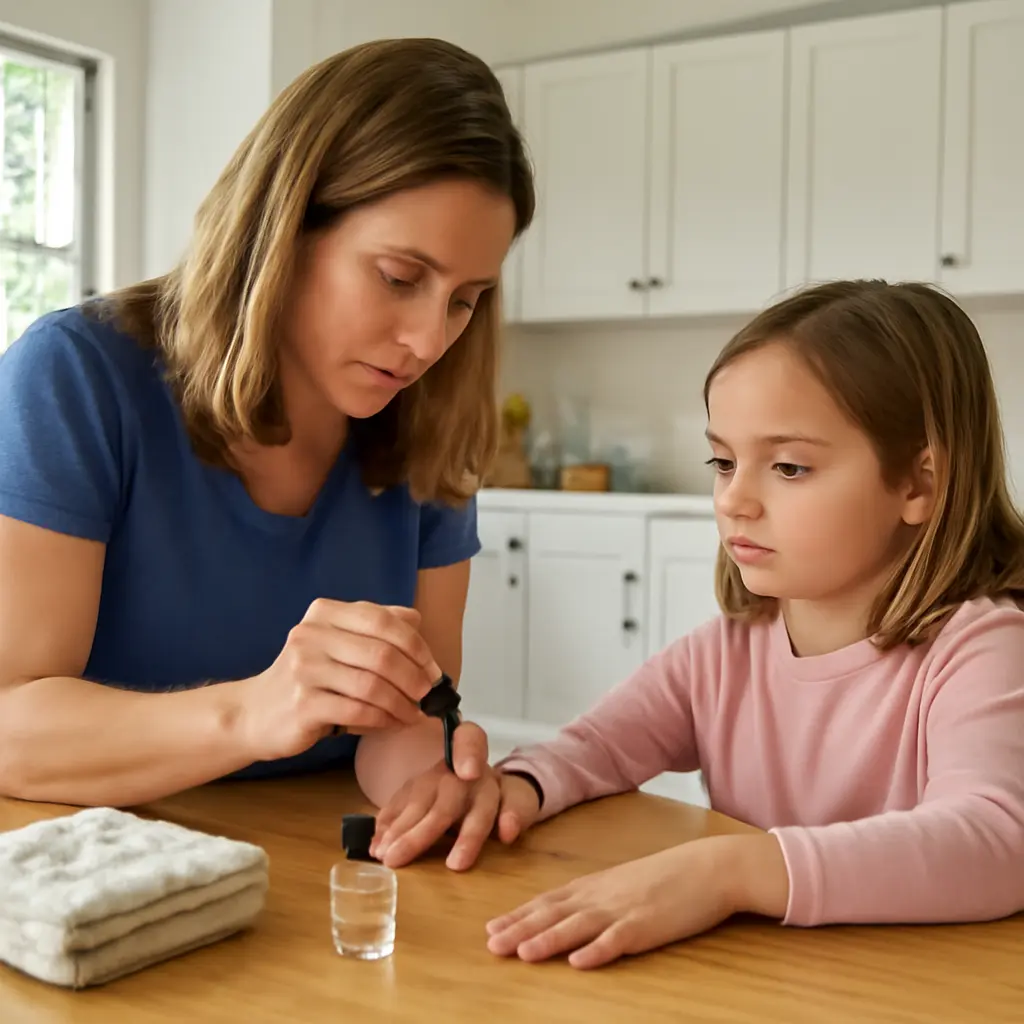
Kids’ nail polish is a cosmetic designed for children’s nails, but “kid-friendly” or “non-toxic” on a label does not guarantee that a product is risk-free if swallowed, inhaled, or used on irritated skin. For most families, the best choice is a clearly labeled, age-appropriate, water-based polish from a reputable maker, used with adult supervision and removed according to its directions. The American Academy of Pediatrics cautions that nail products can pose poisoning risks when children ingest them, while the U.S. Food and Drug Administration notes that cosmetics are not subject to premarket approval in the United States, apart from most color additives. This guide explains what “safer” means, which polish types to consider, what ingredients and claims can—and cannot—tell you, and how to use polish more cautiously.
Choosing kids’ nail polish by safety attributes
There is no single polish that is safest for every child. A practical choice balances the child’s age and behavior, the formula, the application setting, and the likelihood of skin contact or ingestion. The FDA defines cosmetics broadly as products applied to the body for cleansing, beautifying, promoting attractiveness, or altering appearance; nail polish falls within that category. The agency also explains that cosmetic manufacturers are responsible for ensuring product safety and proper labeling, even though most cosmetics do not receive FDA approval before sale.
“Water-based,” “peel-off,” and “five-free” are different product attributes, not interchangeable safety certifications. Water-based describes a formula’s main solvent system; peel-off describes removal; and “five-free” is a voluntary marketing term whose meaning depends on the substances the brand says it excludes. None of these labels proves that a product is harmless if a child eats it or gets it in their eyes.
Water-based polish: a lower-solvent option, not a food-safe product
Water-based polish uses water as a major carrier instead of relying on the conventional solvent blend found in many standard lacquers. Families often choose it because it may have a milder odor and can be easier to remove, depending on the product. Formulas vary, however, and may still contain pigments, preservatives, film-forming ingredients, or other additives. Check the complete ingredient list and follow the label; “water-based” does not mean edible, allergy-proof, or safe for use around the mouth.
Peel-off polish: convenient removal with supervision still needed
Peel-off polish is designed to lift from the nail without conventional remover. That can reduce a family’s need to use acetone or other remover solvents, but it can also tempt children to pick at or chew the coating. Peeling may irritate or damage the nail surface, particularly if the product is pulled off forcefully. Use it only as directed, keep loose flakes away from young children, and do not let a child treat the polish as something to eat or play with.
“Free-from” claims: useful only when the exclusions are specified
Terms such as “three-free,” “five-free,” and “ten-free” refer to a brand’s stated decision to omit a selected list of ingredients. There is no universal legal definition that makes every “free-from” claim mean the same thing. Read the package or manufacturer’s ingredient information to learn which substances are excluded, and remember that replacing one ingredient does not automatically establish that the finished product is safer for every child.
Understanding nail-polish ingredients and exposure
Ingredient names can help parents compare products, but risk depends on the substance, concentration, route of exposure, and amount. The FDA identifies several ingredients and labeling issues relevant to nail products, including formaldehyde-related substances in some nail hardeners and the need for clear warnings on products containing certain ingredients. For children, the most important everyday safeguards are to prevent swallowing, avoid contact with eyes and broken or inflamed skin, and use polish where fresh air can circulate.
Solvents and fumes
Conventional nail lacquers may contain volatile solvents that evaporate during application and drying. Strong odor is not a precise measure of toxicity, but it is a reason to avoid applying polish in a small, poorly ventilated room. Keep the bottle closed when not in use, follow the age and warning directions, and do not use adult salon products on a child unless their labeling and intended use are appropriate.
Formaldehyde and related ingredients
Formaldehyde can appear in some nail-hardening products, and formaldehyde-releasing ingredients may be used in certain cosmetics. These are not the same as saying that every polish contains formaldehyde. If a child has sensitive skin or a history of reactions, avoid nail hardeners unless a clinician recommends one, inspect the ingredient list, and stop use if redness, itching, swelling, or blistering occurs. The FDA advises consumers to follow product warnings and report harmful reactions to cosmetics.
Allergy and irritation
Nail products can cause irritant or allergic contact dermatitis, especially when uncured or wet product touches the surrounding skin. A child with eczema, damaged cuticles, or a known cosmetic allergy may be more vulnerable to discomfort. Apply only to the nail plate, avoid cuticles and skin, and discontinue use if a reaction develops. Seek medical advice for significant swelling, blistering, persistent symptoms, or a reaction near the eyes.
Age, supervision, and safer application practices
A product’s suitability depends not only on its formula but also on whether a child can follow directions and keep fingers away from their mouth and eyes. The American Academy of Pediatrics’ HealthyChildren guidance emphasizes keeping cosmetics and personal-care products out of children’s reach because ingestion can be dangerous. There is no universal age at which every child is ready for nail polish, so parents should use the product’s minimum-age guidance and consider the child’s behavior and developmental stage.
Before and during application
- Choose a product with clear manufacturer details, ingredient information, directions, and warnings; avoid unlabeled or counterfeit products.
- Apply it yourself or supervise closely, in a well-ventilated area away from food, drinks, and flames.
- Use a small amount on the nail only. Avoid the skin, cuticles, eyes, and mouth, and do not apply over broken or irritated skin.
- Let nails dry fully before the child resumes play, and keep bottles, brushes, and remover locked away or otherwise inaccessible.
- Do not use polish on a child who is likely to bite or suck their nails, unless you can reliably prevent exposure.
Removal and storage
Follow the product’s own removal directions rather than improvising with household chemicals. If remover is needed, an adult should apply it in a ventilated space, keep it away from the child’s face, and wash hands afterward. Store polish and remover in their original, closed containers, out of sight and reach. Never transfer them to drink bottles or food containers.
If a child swallows polish or has a reaction
If a child swallows nail polish or remover, contact Poison Control in the United States at 1-800-222-1222 for case-specific advice; call emergency services for severe symptoms, trouble breathing, or loss of consciousness. Do not induce vomiting unless a poison specialist or medical professional tells you to. For suspected skin or eye exposure, follow the product label and seek professional guidance if irritation is substantial or does not resolve.
How to compare products before buying
A quick label review is more useful than relying on a single reassuring phrase. The FDA’s cosmetics guidance explains that ingredient labeling and manufacturer responsibility matter, while marketing words alone do not establish regulatory approval. A simple comparison chart can help families assess practical features without treating any product as completely risk-free.
Comparison chart: “Water-based” describes the formula; “peel-off” describes removal; “free-from” lists selected exclusions; and “non-toxic” is not a guarantee against harm from swallowing or misuse.
- Formula: Is it specifically identified as water-based or intended for children? Is the ingredient information available?
- Use directions: Are age guidance, warnings, drying time, and removal instructions clear?
- Application: Can an adult apply it while preventing skin contact and ingestion?
- Brand accountability: Can you identify the manufacturer and contact it with questions?
- Child’s needs: Does the child have eczema, allergies, nail-biting habits, or difficulty following safety instructions?
For example, a supervised manicure at home with a clearly labeled water-based product may be a more manageable option than an unsupervised application of a strongly scented lacquer. But if a child is likely to chew the polish, the safest choice may be to skip it altogether. The deciding factor is exposure control, not a “natural” or “non-toxic” slogan.
Conclusion: choose for the child, not the slogan
The best nail polish for kids is one with transparent labeling and directions that suit the child’s age and behavior—often a water-based option for families seeking a lower-solvent product, but never a product to treat as edible or risk-free. “Peel-off” and “free-from” claims describe particular features, not proof of universal safety. Apply polish with adult supervision, ventilation, and careful avoidance of skin and mouth exposure; store polish and remover securely; and contact Poison Control or a health professional when exposure or a reaction raises concern. Before buying, read the full label and check current guidance from the FDA and pediatric health authorities.
Sources: U.S. Food and Drug Administration, Cosmetics: FDA’s Role, https://www.fda.gov/cosmetics/cosmetics-laws-regulations/cosmetics-laws-regulations; U.S. Food and Drug Administration, Nail Care Products, https://www.fda.gov/cosmetics/cosmetic-products/nail-care-products; U.S. Food and Drug Administration, Allergens in Cosmetics, https://www.fda.gov/cosmetics/cosmetic-ingredients/allergens-cosmetics; American Academy of Pediatrics, Household Products: How to Prevent Poisoning, https://www.healthychildren.org/English/safety-prevention/all-around/Pages/Household-Products-How-to-Prevent-Poisoning.aspx; Poison Control, Nail Polish and Nail Polish Remover, https://www.poison.org/articles/nail-polish-and-nail-polish-remover-193