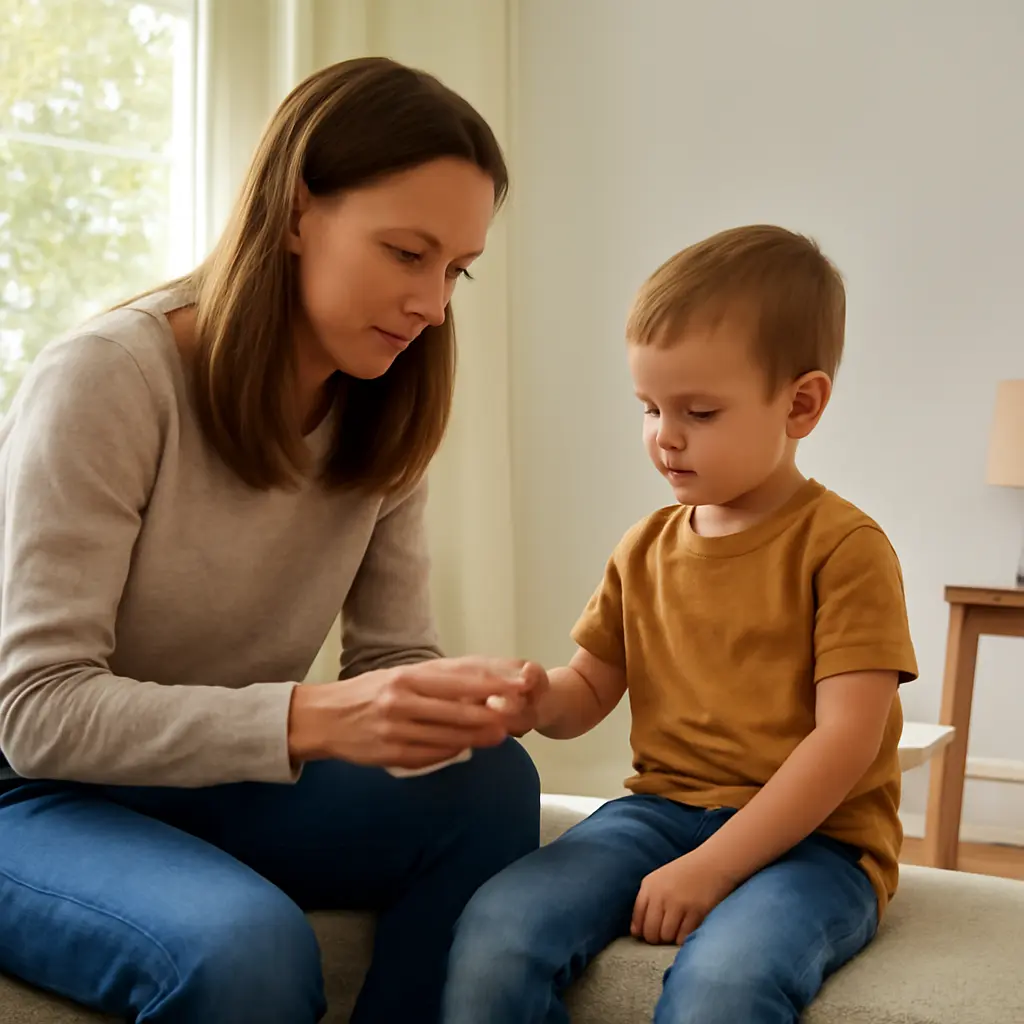
Young children’s nails grow quickly, but small fingers and toes are easy to nick, so safe nail care means trimming gently with an age-appropriate tool, using good light, and avoiding forceful cuticle work. The American Academy of Dermatology Association (AAD) advises trimming nails straight across and smoothing sharp edges; pediatric guidance also stresses choosing a moment when a child is calm and keeping tools clean. These simple steps can help prevent scratches, painful tears, and minor infections while making nail care safer and less stressful.
Dermatologists’ guidance on safe nail care for young children
Safe nail care is routine trimming and gentle cleaning that protect the nail, surrounding skin, and fingertip. Dermatologists’ practical advice centers on cutting only the free edge—the part that extends beyond the fingertip—rather than digging into nail corners or cutting the cuticle. AAD guidance recommends trimming fingernails with a slight curve that follows the fingertip and trimming toenails straight across to reduce the chance of ingrown edges.
There is no single schedule that suits every child: trim when nails become long or sharp, which may be more frequent for fingernails than toenails. Nail-care recommendations are primarily practical safety guidance rather than a treatment proven by a specific clinical trial. The key is consistency, a clean tool, good visibility, and stopping if the child moves or the skin is accidentally cut.
Choosing the right tool and moment
Use a clean, appropriately sized baby nail clipper or blunt-tipped baby scissors, and reserve the tool for the child. Adult clippers can be harder to position on a tiny nail. Choose a calm, well-lit moment; some caregivers find it easier to trim a baby’s nails while the child is asleep or relaxed after a bath, when nails may be softer. Never cut if you cannot clearly see the boundary between nail and skin.
Trimming fingernails and toenails
For fingernails, gently hold the fingertip steady and trim along its natural curve, leaving a small visible margin rather than cutting down to the skin. Smooth any remaining sharp corner with a fine emery board. For toenails, trim straight across and avoid rounding the corners deeply; this helps prevent a nail edge from pressing into the surrounding skin. Do not pull, bite, or tear a nail, since those actions can injure the nail fold and introduce germs.
Cleaning under nails and caring for cuticles
Clean visible dirt with soap, water, and a soft brush if needed. Avoid sharp implements and aggressive scraping beneath the nail, where delicate skin can be injured. The cuticle is the thin skin at the nail base that helps protect the area from infection; do not cut or push it back. If the skin around a nail is dry, a small amount of fragrance-free moisturizer can help, especially after handwashing.
Preventing common nail injuries and problems
Gentle technique matters because children’s fingertips are small and their movements can be sudden. A nick is often minor, but redness, swelling, worsening pain, or drainage can signal infection and deserves attention. Keeping nails short enough not to snag—without cutting them too short—also reduces torn edges and scratching.
If a fingertip is nicked
If trimming causes a small cut, apply gentle, steady pressure with clean gauze or cloth until bleeding stops, then rinse with clean water and cover if needed. Do not apply household chemicals or attempt to cut away attached skin. Seek medical advice if bleeding does not stop with pressure, the wound is deep, or signs of infection develop. For a child with a bleeding disorder, immune-system condition, or another relevant medical concern, ask the child’s clinician for individualized first-aid guidance.
Recognizing ingrown nails and infection
An ingrown toenail occurs when a nail edge presses into or grows into the nearby skin. Tenderness, redness, or swelling along a nail edge can be early signs. Avoid digging into the corner or trying to remove an embedded nail at home. Contact a pediatrician or dermatologist if symptoms are painful, persistent, worsening, or accompanied by pus, spreading redness, or fever. The same caution applies to a nail that becomes unusually discolored, thickened, detached, or misshapen.
Avoiding biting, picking, and shared tools
Nail biting and picking can damage the nail and surrounding skin. Rather than scolding, keep nails smooth, notice situations that trigger the habit, and ask a pediatric clinician for support if it causes repeated skin injury. Do not share clippers or files between children without cleaning them; shared tools can transfer germs. Clean and dry nail tools after use, and store them out of children’s reach.
A practical, child-friendly nail-care routine
A predictable routine can make trimming safer and less intimidating. Explain what you are doing in age-appropriate language, let an older child choose a comfortable position, and take breaks if they become restless. A second adult can help steady a young child, but should not restrain them in a way that risks a sudden injury.
- Wash your hands and make sure the nail tool is clean and dry.
- Seat or position the child securely in bright light; steady one finger or toe at a time.
- Trim only the nail’s free edge, using a gentle motion and avoiding the surrounding skin.
- File sharp edges smooth, then check for redness, a snag, or an accidental nick.
- Put the tool away safely and clean it before storing.
For infants, tiny nails can be particularly difficult to see and hold. If clipping feels risky, use a baby file to shorten sharp edges gradually, or ask a pediatrician to demonstrate a safe technique. Do not use teeth to trim an infant’s nails: biting can create ragged edges and expose the skin to germs from the mouth.
When to seek professional advice
Most nail care can be done at home, but unusual changes or repeated injuries merit clinical advice. A dermatologist or pediatrician can assess a painful nail, suspected infection, persistent ingrowing, nail separation, or unexplained changes in color or shape. Get prompt medical guidance for spreading redness, pus, significant swelling, fever, or pain that interferes with walking or using a hand.
For children with diabetes, reduced sensation, circulation problems, immune suppression, or a history of serious nail complications, ask their healthcare professional whether routine trimming should be adapted or performed by a trained clinician. These conditions can make a small injury more consequential, so individualized advice is safer than relying on a general routine.
Conclusion: Gentle care protects growing nails
Dermatologists’ core message is straightforward: use a clean child-sized tool, trim only the free edge in good light, file sharp edges, and leave cuticles and embedded nail corners alone. A calm routine helps prevent scratches and small injuries, while early attention to pain, swelling, or drainage can catch problems before they worsen. For a child’s specific medical risks or persistent nail symptoms, consult a pediatrician or dermatologist rather than attempting treatment at home.
Sources: American Academy of Dermatology Association, Nail care tips, https://www.aad.org/public/everyday-care/nail-care-secrets/basics/nail-care-tips; American Academy of Dermatology Association, How to trim your nails, https://www.aad.org/public/everyday-care/nail-care-secrets/basics/trim-nails; American Academy of Pediatrics, Caring for Your Baby: Nail Care, https://www.healthychildren.org/English/ages-stages/baby/bathing-skin-care/Pages/Caring-for-Your-Baby-Nail-Care.aspx; Mayo Clinic, Ingrown toenails: Diagnosis and treatment, https://www.mayoclinic.org/diseases-conditions/ingrown-toenails/diagnosis-treatment/drc-20355908