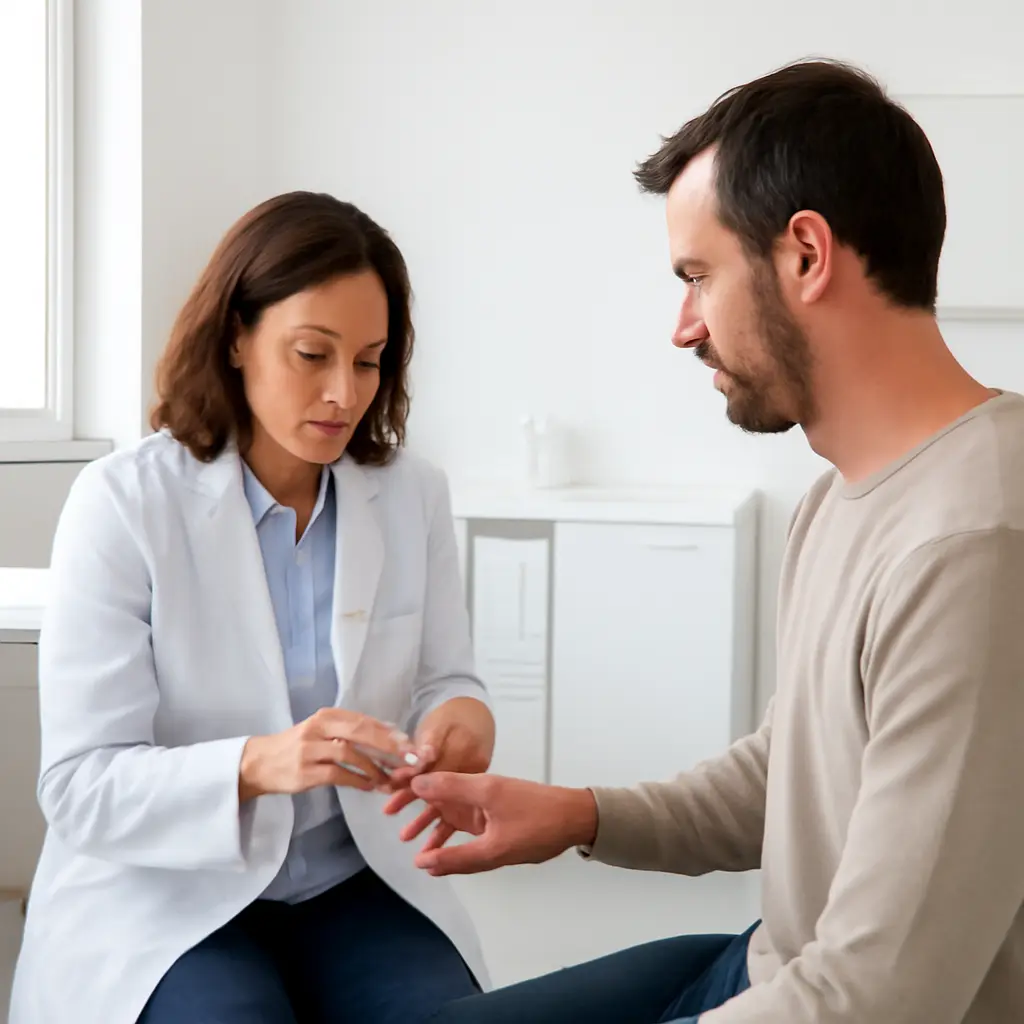
Nail sensitivity is discomfort, tenderness, or pain involving the nail plate or the skin and tissue around it. Dermatologists generally treat it as a symptom—not a diagnosis—and look for causes such as injury, inflammation, infection, or changes in the nail’s attachment. The American Academy of Dermatology (AAD) advises people to seek care for nail changes that persist or worsen, particularly pain, swelling, or discoloration. Understanding what sensitivity can mean, how clinicians assess it, and which self-care steps are safe helps distinguish a minor irritation from a problem that needs treatment.
How dermatologists define nail sensitivity and assess it
Dermatologists use “nail sensitivity” as a plain-language description rather than a specific medical condition. The nail plate itself is made mostly of keratin and has no nerves; pain commonly comes from the nail bed or the surrounding folds of skin, which do contain sensory nerves. The Merck Manual explains that clinicians evaluate nail disorders by examining the nail unit and considering symptoms, appearance, and relevant exposures.
That distinction matters: pressure pain after a stubbed toe, tenderness beside a red nail fold, and soreness beneath a lifting nail may feel similar but point to different causes. Dermatologists typically ask when symptoms began, whether one or several nails are affected, whether there was trauma or a manicure, and whether the person has conditions such as psoriasis or diabetes.
Pain in the nail plate, nail bed, and surrounding folds
The nail unit includes the nail plate, the nail bed beneath it, the matrix where nail growth begins, and the skin folds at the sides and base. The American Academy of Dermatology describes these structures as interconnected parts of nail health. A tender edge may involve the nail fold; pain under the plate can follow bruising or separation; and changes beginning near the cuticle may involve the matrix.
What a dermatologist looks for
A clinical assessment considers tenderness alongside visible signs: redness, warmth, swelling, drainage, thickening, discoloration, ridges, or separation from the nail bed. Depending on the findings, a clinician may examine the area more closely or test a nail sample when fungal infection is suspected. The AAD cautions that nail changes have multiple possible explanations, so appearance alone does not always establish the cause.
Common causes dermatologists connect with nail sensitivity
Once the location and pattern are clear, dermatologists consider causes ranging from everyday mechanical stress to inflammatory skin disease. The most useful clues are often the timing of the pain, the number of nails involved, and whether sensitivity comes with swelling or a visible change.
Injury and pressure
A blow, repetitive pressure, tight footwear, nail biting, or overly aggressive trimming can irritate the nail unit. The National Health Service notes that injuries may cause bruising beneath a nail, sometimes producing dark discoloration and pain. A sudden, severe throbbing sensation after an impact deserves medical assessment, especially if the nail is badly damaged or a large area has changed color; do not attempt to pierce or drain it at home.
Inflammation and infection around the nail
Paronychia is inflammation of the skin around a nail and may be acute or chronic. The Merck Manual reports that acute paronychia often follows a break in the skin, such as a hangnail or manicure injury, and can cause tenderness, redness, and swelling; pus may develop. Chronic cases are often associated with repeated wet work or irritants. Spreading redness, worsening pain, fever, or drainage warrants prompt clinical advice.
Psoriasis, eczema, and contact irritation
Inflammatory skin conditions can affect the nail folds or nail growth, leading to tenderness as well as pitting, ridging, thickening, or separation. The AAD notes that nail psoriasis may occur with or without obvious skin plaques. Nail products can also trigger irritation or allergic contact dermatitis, particularly when chemicals contact surrounding skin. If sensitivity repeatedly follows gel, acrylic, polish, or adhesive use, stop the suspected product and discuss the reaction with a dermatologist.
Ingrown nails and nail separation
An ingrown toenail occurs when the nail edge presses into nearby skin, commonly causing tenderness and inflammation at one side of the toe. Nail separation, called onycholysis, creates a gap between the plate and nail bed; it can follow trauma, irritants, infection, or skin disease. The American Academy of Dermatology advises keeping separated nails trimmed carefully and avoiding attempts to clean underneath with sharp tools, which can worsen injury.
When nail sensitivity needs medical attention
Mild soreness after a minor bump may improve as the nail grows, but pain that persists, intensifies, or appears with significant nail changes should not be dismissed. Because many nail disorders look alike, a clinician can help identify the cause and prevent unnecessary or inappropriate treatment.
Warning signs to take seriously
- Increasing redness, warmth, swelling, pus, or pain around the nail.
- A nail that lifts, changes color substantially, becomes misshapen, or develops a new dark streak.
- Severe pain after an injury, an open wound, or difficulty using the affected finger or toe.
- Symptoms that do not improve, keep returning, or affect several nails without an obvious explanation.
People with diabetes, poor circulation, or a weakened immune system should seek advice sooner for nail wounds or signs of infection. The U.S. Centers for Disease Control and Prevention emphasizes that diabetes can increase the risk of foot complications, making prompt attention to foot injuries especially important.
A practical example: soreness after a manicure
If several fingertips become itchy, red, or tender after a gel manicure, the timing and distribution can help a dermatologist consider product irritation or allergy rather than a single traumatic injury. A clinician may recommend avoiding the suspected products and may consider patch testing when allergic contact dermatitis is suspected. Do not apply more product to cover the reaction, and seek care if swelling, blistering, or worsening pain develops.
What dermatologists recommend for safer nail care
Care depends on the cause, but dermatologists commonly emphasize protecting the nail unit, reducing repeated irritation, and avoiding self-treatment that damages the skin. These steps can lower preventable stress while a mild problem settles or while a clinician evaluates persistent symptoms.
- Trim nails carefully and avoid cutting cuticles or digging under the nail.
- Choose shoes with enough room at the toes, and limit repeated pressure on sore nails.
- Wear protective gloves for prolonged wet work or contact with cleaning products.
- Pause nail cosmetics if symptoms began after their use, and avoid applying products to irritated or broken skin.
- Keep the area clean and dry; do not use leftover antibiotics, antifungals, or sharp tools without professional guidance.
These measures are not a substitute for diagnosis. For example, fungal disease, psoriasis, bacterial infection, and trauma require different approaches, and treating the wrong condition can delay improvement.
Conclusion: nail sensitivity is a clue, not a diagnosis
Dermatologists interpret nail sensitivity by identifying where it hurts, how it began, and what changes accompany it. Injury and pressure, inflammation or infection, skin disease, product reactions, ingrown nails, and nail separation are among the possible explanations. Protect nails from avoidable trauma, pause suspected irritants, and arrange medical evaluation for persistent pain or warning signs—especially if infection or a foot complication is possible. For further guidance, consult a dermatologist or a primary-care clinician rather than relying on appearance alone.
Sources: American Academy of Dermatology Association, Nail care and nail conditions, https://www.aad.org/public/everyday-care/nail-care-secrets; Merck Manual Professional Edition, Paronychia, https://www.merckmanuals.com/professional/dermatologic-disorders/nail-disorders/paronychia; Merck Manual Professional Edition, Overview of Nail Disorders, https://www.merckmanuals.com/professional/dermatologic-disorders/nail-disorders/overview-of-nail-disorders; National Health Service, Nail problems, https://www.nhs.uk/conditions/nail-problems/; U.S. Centers for Disease Control and Prevention, Diabetes and Your Feet, https://www.cdc.gov/diabetes/ about/about-diabetes-and-your-feet.html