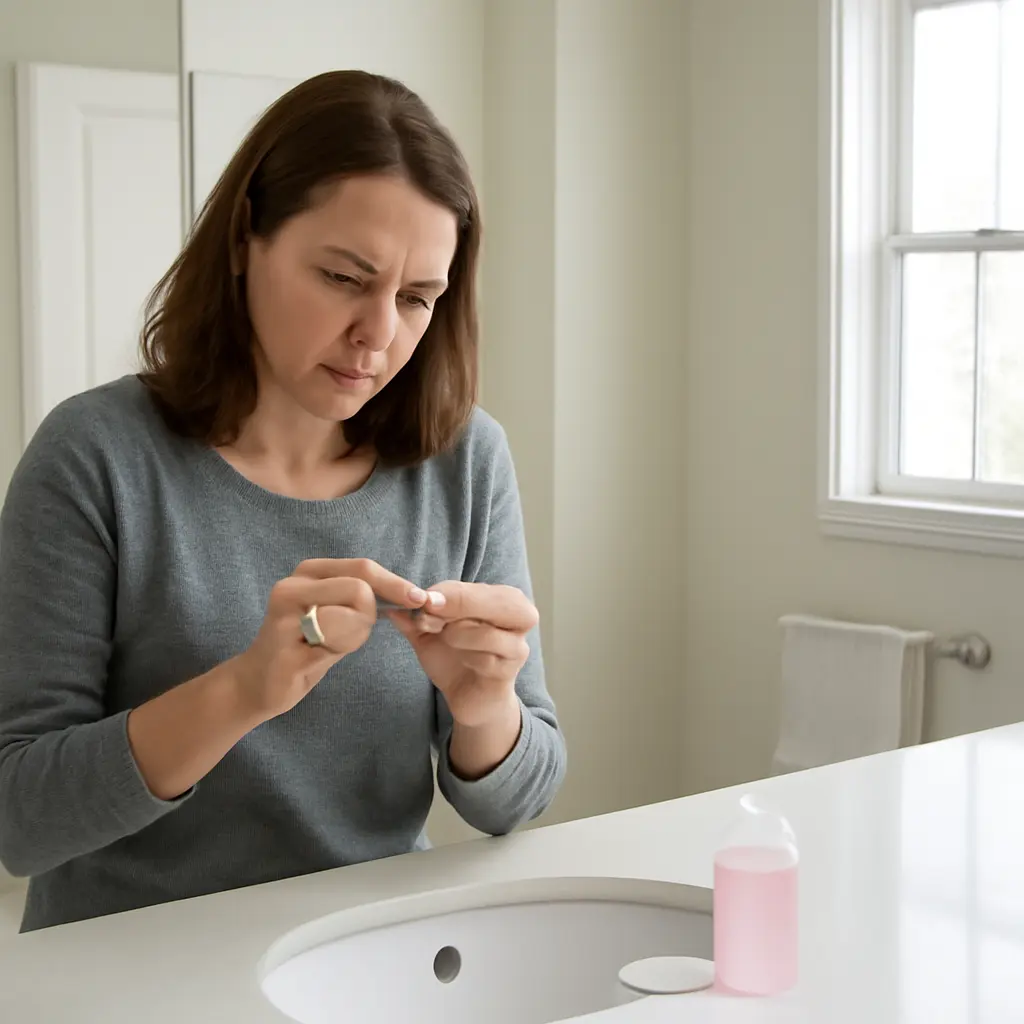
Nail polish stains are the lingering color left on skin or nails after polish is removed, and they are usually caused by pigment or dye rather than by polish residue alone. The stubborn mark is often more noticeable after dark, red, or highly pigmented shades, especially when polish has been worn for a while or removed with a weak, dried-out, or unsuitable remover. The safest fix depends on where the stain is: nail-plate discoloration, skin staining, and polish transferred to clothing or a surface are different problems. Understanding those differences helps prevent over-scrubbing, avoid irritating skin, and spot the rare case when discoloration may need medical attention.
Nail polish stains: why pigment persists after removal
A nail polish stain is discoloration that remains after the film-forming polish has been dissolved or lifted. The American Academy of Dermatology describes nail polish as a potential cause of nail discoloration, while dermatology guidance also notes that nail changes can have causes unrelated to cosmetics. In practical terms, color may linger because pigments have adhered to the nail surface, collected around the cuticle, or transferred to skin. It does not automatically mean that the nail is damaged or that polish remains on it.
The distinction matters because the nail plate is made of compact keratin and is not living skin. Aggressive scraping or repeated solvent exposure can roughen the plate and dry the surrounding skin without removing the underlying discoloration any faster. For context, the U.S. Food and Drug Administration lists acetone among ingredients used in some nail products and removers; the American Contact Dermatitis Society also recognizes nail cosmetics and their ingredients as potential sources of irritant or allergic reactions. Neither source suggests that every stain is dangerous—but both support using products carefully and paying attention to irritation.
Nail-plate staining
Nail-plate staining is color that remains on the hard surface of the nail after polish has been removed. Strong pigments, including those in some red, burgundy, blue, and very dark shades, can leave a temporary tint. A base coat can create a barrier between colored polish and the nail, but it cannot guarantee that staining will never occur. If the stain is cosmetic and the nail looks otherwise normal, it commonly becomes less visible as the nail grows out.
Cuticle and skin staining
Skin staining happens when wet polish or dissolved pigment spreads onto the nail folds, cuticles, or fingertips. Skin is more vulnerable to irritation than the nail plate, so rubbing it repeatedly with acetone or household cleaners can cause dryness, redness, or discomfort. Remove fresh polish from skin gently with a cotton swab and a small amount of remover, then wash with soap and water. Avoid using nail polish remover on broken, inflamed, or very sensitive skin.
Stains on fabric and household surfaces
A polish mark on clothing, carpet, or furniture is a separate stain problem: the colorant is held in a coating that may bond to or damage the material. Acetone is not suitable for every surface and can dissolve some plastics, finishes, and synthetic fibers. The American Cleaning Institute advises checking care labels and testing a cleaning product on an inconspicuous area first. For valuable or delicate items, consult the manufacturer or a professional cleaner rather than experimenting with solvents.
Polish removal: what works without damaging nails
Polish removal is the controlled process of softening and lifting a polish film, usually with a remover formulated for nail products. Acetone dissolves many conventional polish films efficiently, while non-acetone removers use other solvents and may take longer. The right choice depends on the product: regular lacquer, gel polish, and artificial enhancements do not respond identically. A useful rule is to follow the polish maker’s removal instructions and avoid peeling or forcefully scraping product from the nail.
Conventional lacquer and remover technique
For ordinary lacquer, wet a cotton pad with remover, press it against the nail briefly, then wipe from the base toward the tip. This gives the solvent time to soften the coating and can reduce repeated rubbing. Use ventilation, keep remover away from flames, and close the container promptly; many removers contain volatile, flammable solvents. Afterward, wash hands and apply moisturizer or cuticle oil to help relieve dryness.
Gel polish and artificial nail products
Gel polish and enhancement products may require a specific soak-off process or professional removal. Peeling or prying them away can remove layers of natural nail with the product. The American Academy of Dermatology advises people using gel manicures to avoid picking at polish and to allow nails time to recover between manicures. If a product does not soften as its instructions describe, stop rather than escalating to forceful filing or scraping.
Gentle ways to address residual discoloration
When the nail is clean but still tinted, time and gentle care are usually safer than intensive stain-removal tricks. Do not use bleach, abrasive household cleaners, or sharp tools on nails or skin. A fine buffer may reduce surface discoloration, but frequent or heavy buffing thins the nail plate and can increase splitting. If the color is not clearly superficial, or if the nail is painful, thickened, lifting, or changing shape, stop cosmetic treatment and seek advice from a clinician.
Stubborn nail discoloration: prevention and warning signs
Prevention is usually simpler than trying to erase a stain after it appears. A base coat, careful application that avoids the skin, and timely removal can reduce pigment transfer. Give nails breaks from repeated polish and remover use if they become dry or brittle, and moisturize the nail folds. A stain that follows a particular shade and gradually grows out is more consistent with cosmetic pigment than a new mark that changes independently of polish.
When discoloration may not be a polish stain
Nail discoloration can also result from infection, injury, medication, or other health conditions. The American Academy of Dermatology recommends medical evaluation for concerning nail changes; a dark streak that is new or changing, pigment extending onto surrounding skin, persistent pain, or a nail that separates from its bed should not be treated as a cosmetic stain without assessment. A clinician can distinguish harmless staining from conditions that need treatment.
Practical prevention checklist
- Apply a base coat before dark or highly pigmented polish.
- Use remover as directed and avoid prolonged, repeated rubbing.
- Do not peel gel polish or scrape the nail plate with sharp tools.
- Keep remover away from flames and use it with adequate ventilation.
- Stop using a product if it causes burning, rash, swelling, or persistent irritation.
- Ask a medical professional about discoloration that persists, spreads, or changes in appearance.
Conclusion: treat the stain according to where it is
The stubborn stain problem is often a pigment problem, not proof that polish remains. Nail-plate tint, skin transfer, and marks on fabric or surfaces require different approaches, and the safest approach is gentle removal followed by patience—not harsh scrubbing or improvised chemicals. Use a base coat and product-specific instructions to prevent repeat staining, and get medical advice when nail discoloration is persistent or accompanied by other changes. For further guidance, consult dermatology advice and the care instructions supplied with the polish and remover you use.
Sources: American Academy of Dermatology, Gel manicures: Tips for healthy nails, https://www.aad.org/public/everyday-care/nail-care-secrets/basics/gel-manicures; American Academy of Dermatology, 12 nail changes a dermatologist should examine, https://www.aad.org/public/diseases/a-z/nail-changes-dermatologist-should-examine; U.S. Food and Drug Administration, Nail Care Products, https://www.fda.gov/cosmetics/cosmetic-products/nail-care-products; American Contact Dermatitis Society, Nail Cosmetics, https://www.contactderm.org/resources/education/nail-cosmetics; American Cleaning Institute, Stain Removal, https://www.cleaninginstitute.org/cleaning-tips/clothes/stain-removal