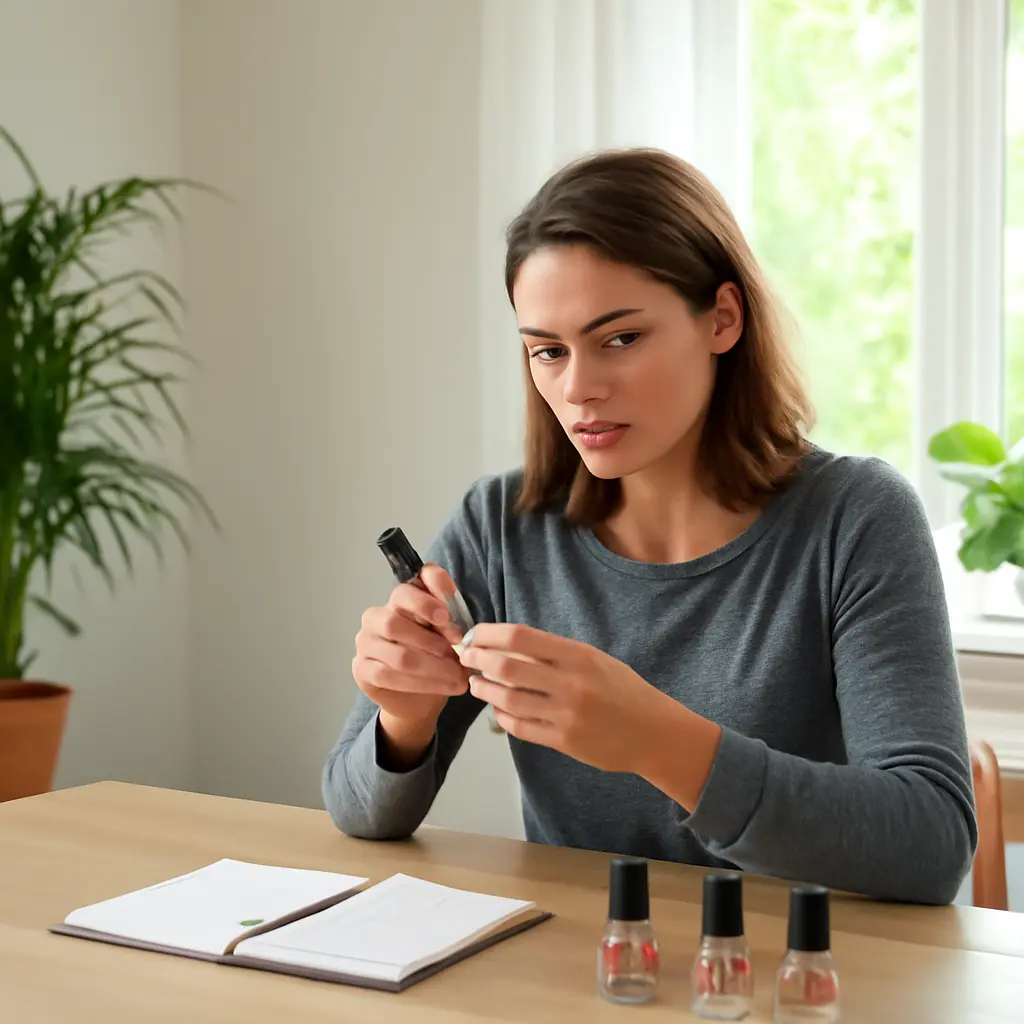
Nail polish safety claims can sound reassuring—“clean,” “non-toxic,” or “10-free”—but none of those phrases, by itself, proves that a product is harmless or environmentally preferable. Nail polish is a mixture of ingredients, and safety depends on the specific formula, how it is used, and the exposure involved. To spot greenwashing, check what a claim actually promises, look for ingredient-level evidence and meaningful qualifications, and distinguish a hazard from the risk posed by a particular use. This matters beyond marketing: the U.S. Federal Trade Commission’s Green Guides warn against broad, unqualified environmental-benefit claims because consumers may interpret them more widely than the evidence supports.
Evaluate Nail Polish Safety Claims Against Evidence
A nail polish safety claim is a statement about a product’s ingredients or effects—for example, “non-toxic,” “safer,” or “free from” a named chemical. The U.S. Food and Drug Administration (FDA) explains that cosmetic products and ingredients generally do not need its approval before going on the market, with color additives as an important exception. Companies are responsible for ensuring their products are safe when used as directed. That regulatory context means a safety-sounding label should not be mistaken for an FDA endorsement.
The key distinction is between a defined, limited claim and an expansive promise. “Does not contain ingredient X” can be checked against an ingredient list, while “safe,” “clean,” and “chemical-free” are vague unless the brand explains what they mean and supplies evidence. The FTC’s Green Guides address environmental marketing, not medical safety; however, their central warning is relevant to both kinds of messaging: claims should be truthful, substantiated, and clear about their scope.
“Non-toxic” does not mean risk-free
“Non-toxic” is often presented as a simple verdict, but toxicity depends on the substance, dose, route, and duration of exposure. A product may pose different concerns for someone applying polish occasionally in a ventilated room than for a salon worker handling products repeatedly. The FDA advises consumers to follow cosmetic labels and use products as directed; its guidance does not establish “non-toxic” as a universal certification for nail polish.
Treat the phrase as a prompt to ask: non-toxic under what conditions, according to which test, and for whom? A credible explanation identifies the product and exposure assessed, names the testing method or standard, and avoids suggesting that an absence of risk has been proven for every user and use.
“Free-from” and “10-free” claims have limits
A “free-from” claim identifies an excluded ingredient; a “10-free” claim typically means a brand says it excludes a selected list of ten substances. There is no single universal list implied by the phrase “10-free,” so consumers should check which ingredients the company counts. The claim does not, on its own, show that the substitutes are safer, that the full formula has been assessed, or that the product is environmentally better.
For example, a polish that excludes a named ingredient may still contain other solvents, resins, pigments, or fragrance components. The meaningful questions are whether the excluded substance is clearly identified, whether the ingredient list supports the claim, and whether the brand explains the replacement ingredients and the basis for calling them preferable.
Check Nail Polish Ingredients, Exposure, and Documentation
Labels are useful, but they are only one part of evaluating a safety claim. Ingredient names help identify what is in a formula; exposure context helps judge how a product is used; and independent or regulatory documentation can show whether a brand’s explanation is supported. Together, these checks are more informative than a leaf icon, a “clean” badge, or a long list of excluded chemicals.
Read the ingredient list rather than relying on a badge
The FDA recommends reading cosmetic labeling and cautions that terms such as “natural” do not automatically establish safety. Compare the front-label promise with the ingredient declaration on the package or the brand’s official product information. If a brand advertises that a product is free from a specific ingredient, look for that exact ingredient and any relevant synonyms in the disclosed list, while recognizing that a label alone cannot verify the accuracy of a manufacturer’s claim.
The European Commission’s Scientific Committee on Consumer Safety (SCCS) evaluates the safety of cosmetic ingredients and publishes scientific opinions on particular substances and conditions of use. Its work illustrates why safety is ingredient- and exposure-specific: an opinion about one ingredient or use cannot automatically be applied to every polish formula or every person.
Consider exposure and directions for use
Exposure means how a person encounters a product, including the amount, frequency, and route. Nail polish is commonly applied to nails, but people may also encounter vapors during application or contact wet product with skin. The National Institute for Occupational Safety and Health (NIOSH) notes that nail salon workers can face chemical exposures from products used in salons, making ventilation and safe work practices important parts of risk reduction.
A consumer claim that ignores repeated workplace exposure may be incomplete for nail technicians. Look for practical guidance on ventilation, avoiding skin contact, keeping containers closed, and following product directions. If the brand’s safety message says “safe for everyone” but offers no qualifications for use or exposure, that broad promise deserves scrutiny.
Ask for substantiation, not just a certificate graphic
Substantiation is the evidence that supports a marketing claim. For safety statements, useful details may include the precise claim tested, the test method, the product or ingredients assessed, and who conducted the evaluation. A logo or “dermatologist tested” statement is not a substitute for explaining what was tested and what the result does—and does not—show.
The FDA states that it does not define or regulate the term “hypoallergenic” for cosmetics in a way that guarantees a product will not cause allergic reactions. This is a useful reminder that familiar assurance words may have less precise meaning than consumers assume. When a brand invokes a study or certification, check the issuing organization, whether the assessment applies to the finished formula, and whether the supporting information is accessible.
Spot Environmental Greenwashing in Polish Marketing
Safety and environmental claims are related in marketing but are not interchangeable. A product’s ingredient profile does not, by itself, establish its full environmental impact, which can also depend on manufacturing, packaging, transport, use, and disposal. The FTC’s Green Guides advise marketers to avoid broad, unqualified claims such as “green” or “eco-friendly” unless they can substantiate the overall impression consumers are likely to take away.
Watch for vague words and unsupported visuals
Words such as “eco,” “planet-safe,” “clean,” and “green” can imply benefits far beyond a single ingredient choice. Leaf imagery, earth-toned packaging, and nature references may reinforce that impression without proving a measurable environmental improvement. Under the FTC’s guidance, a qualified claim should specify the benefit—for example, recycled packaging content or a particular ingredient exclusion—and make its limits clear.
A more credible claim says exactly what changed and how it was measured. “Bottle contains 30% post-consumer recycled glass,” for instance, is narrower and more verifiable than “better for the planet,” provided the percentage is accurate and the claim refers to the bottle rather than the entire product lifecycle.
Check whether comparisons are fair and specific
Comparative claims need a clear baseline. “Safer formula” should identify safer than what, for whom, and according to which measure. “Less harmful” likewise needs a defined comparison and evidence that the difference is meaningful. If the comparison is only against an ingredient the brand has chosen to exclude, it may not tell consumers whether the replacement or finished product performs better on the relevant safety or environmental measure.
The European Commission’s 2023 proposal on empowering consumers for the green transition described concerns about unreliable environmental claims and proposed stronger rules against misleading sustainability messaging. The proposal is policy context rather than proof about any particular polish brand; it underscores why precise wording and evidence matter when businesses advertise environmental benefits.
Use a Practical Greenwashing Checklist
Before accepting a polish safety or sustainability promise, compare the marketing language with the label, product information, and supporting evidence. These questions help separate a specific, testable statement from a broad impression:
- What exactly is the claim: ingredient exclusion, reduced exposure, a test result, or an environmental benefit?
- Does the brand define terms such as “clean,” “non-toxic,” “10-free,” or “eco-friendly”?
- Can you identify the excluded substances or the specific environmental metric?
- Does evidence apply to the finished product, the ingredient, the packaging, or only one part of the claim?
- Is the test or certification explained, with its scope and limitations?
- Does the brand discuss intended use, ventilation, skin contact, or repeated occupational exposure where relevant?
- Does the wording imply that the whole product is harmless or sustainable based on one narrow feature?
A simple way to assess the answer is to separate three questions: What is in the product? What exposure does the claim address? What evidence supports the conclusion? If a company answers only the first question, its marketing may be communicating more than its evidence can establish.
Conclusion: Judge Nail Polish Claims by Their Scope
Greenwashing is easier to spot when safety language is tested against its actual scope. “Non-toxic” does not establish zero risk; “10-free” does not prove the remaining formula is safer; and “eco-friendly” does not demonstrate a lower overall environmental impact. Ingredient lists, realistic exposure information, transparent testing, and specific environmental metrics provide a stronger basis for judgment than badges or broad promises.
Consumers can ask brands for the ingredient list, the definition behind each claim, and the evidence supporting it. Nail technicians can also consider workplace ventilation and safe handling, since repeated exposure differs from occasional home use. For further reading, consult the FDA’s cosmetics safety guidance, NIOSH resources for nail salon workers, and the FTC Green Guides. Clear, qualified claims help consumers make informed choices—and encourage brands to communicate what their products can genuinely support.
Sources: U.S. Federal Trade Commission, Guides for the Use of Environmental Marketing Claims (“Green Guides”), https://www.ftc.gov/business-guidance/resources/green-guides; U.S. Food and Drug Administration, Cosmetics: How to Tell if a Cosmetic Is Safe, https://www.fda.gov/cosmetics/cosmetics-laws-regulations/cosmetics-how-tell-if-cosmetic-safe; U.S. Food and Drug Administration, “Hypoallergenic” Cosmetics, https://www.fda.gov/cosmetics/cosmetics-labeling-claims/hypoallergenic-cosmetics; U.S. Food and Drug Administration, Cosmetic Ingredients, https://www.fda.gov/cosmetics/cosmetic-ingredients; National Institute for Occupational Safety and Health, Nail Salon Workers: A Guide to Protecting Your Health, https://www.cdc.gov/niosh/docs/2015-102/; European Commission, Scientific Committee on Consumer Safety (SCCS), https://health.ec.europa.eu/scientific-committees/scientific-committee-consumer-safety-sccs_en; European Commission, Proposal for a Directive on Empowering Consumers for the Green Transition, 2023, https://environment.ec.europa.eu/topics/circular-economy/green-claims_en.