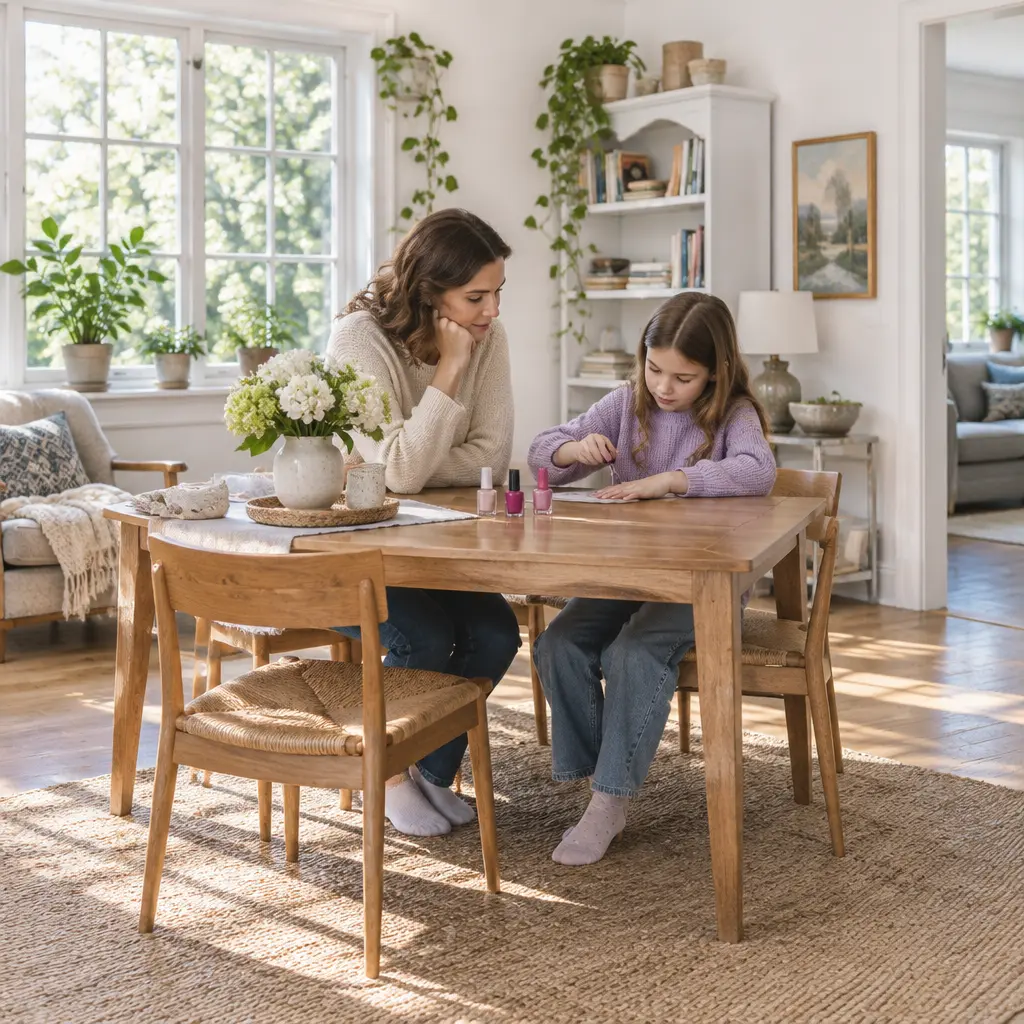
Kids’ nail polish is a cosmetic product made to color children’s nails, but “made for kids” does not guarantee it is risk-free. For most children, occasional use on intact nails is likely to pose little risk when an age-appropriate product is used as directed and kept away from the mouth and skin. The main concerns are accidental swallowing, irritation or allergy, fumes in poorly ventilated spaces, and exposure to ingredients that may not be suitable for every child. The American Academy of Pediatrics (AAP) advises parents to limit children’s exposure to cosmetics and choose products carefully. Here’s how to assess labels, apply polish more safely, and respond if something goes wrong.
What Kids’ Nail Polish Safety Means
“Safety” means the likelihood and severity of harm under a product’s intended conditions of use—not a guarantee that no child will react or that every exposure is harmless. The U.S. Food and Drug Administration (FDA) regulates cosmetics, including nail polish, but most cosmetics and their ingredients are not FDA-approved before sale. Manufacturers are responsible for ensuring that products are safe when used as directed and properly labeled.
Nail polish is a mixture that may include film-forming ingredients, pigments, solvents, and other additives. Formula and exposure matter: a brief application on the nail is different from repeated skin contact, breathing concentrated vapors, or swallowing polish. Terms such as “non-toxic,” “natural,” “water-based,” and “three-free” are not a substitute for checking the full label and following directions.
Short-term risks: swallowing, irritation, and fumes
The most immediate concern for young children is putting wet polish, a brush, or a bottle in the mouth. The National Capital Poison Center notes that a small taste of nail polish often causes an unpleasant taste or mild stomach upset, but larger amounts or particular ingredients can be more serious. Polish remover deserves separate caution: many removers contain acetone, which can irritate the mouth and stomach and may cause more serious effects if a substantial amount is swallowed.
Polish vapors can irritate the eyes, nose, or throat, especially in a small, poorly ventilated room. If a child develops coughing, dizziness, nausea, or breathing difficulty, stop use and move them to fresh air. Ventilation reduces exposure, but it does not make ingestion or prolonged exposure safe.
Allergy and skin reactions
Nail products can cause irritant or allergic contact dermatitis. Redness, itching, swelling, or a rash may occur around the nails, but reactions can also appear on skin that touches the nails, such as the eyelids or face. The American Academy of Dermatology identifies nail cosmetics as a possible source of allergic reactions. Stop using the product if a reaction develops; seek medical advice for persistent symptoms, significant swelling, blistering, or a rash near the eyes.
Ingredients and Product Labels Parents Should Check
Reading the label helps parents identify the product type, directions, warnings, and responsible company. It cannot predict every individual reaction, and a marketing claim is not the same as independent safety testing. The FDA requires cosmetic labels to identify ingredients, subject to certain exceptions, and to include relevant warnings and directions where needed.
“Non-toxic,” “water-based,” and “free-from” claims
“Non-toxic” does not mean edible, safe to swallow, or incapable of causing irritation or allergy. “Water-based” describes a formulation category, not a guarantee that the product is harmless; it still should be used according to its label. “Three-free” and similar claims generally refer to the absence of certain named ingredients, but the specific meaning can vary between brands. Check the ingredient list and warnings rather than relying on the front of the bottle.
Avoid products with missing, unreadable, or unclear labeling, and do not use polish that has been transferred to an unmarked container. Keep the original packaging so you can identify the product if a child has a reaction or accidental exposure.
Age, nail condition, and product type
There is no single age at which every child is ready for nail polish. Consider whether your child can keep their hands away from their mouth and eyes while the polish dries and can follow directions. For toddlers and children who frequently suck or chew their fingers, postponing polish is a practical way to reduce ingestion and skin-contact risks.
Use polish only on healthy, intact nails. Avoid applying it over broken skin, inflamed cuticles, or nails that look infected or unusually discolored; ask a clinician about persistent nail changes. Peel-off and water-based products may be easier to remove in some cases, but they are not automatically safe to ingest and can still cause irritation or allergy.
How to Apply Kids’ Nail Polish More Safely
Safer use depends on reducing exposure and preventing access to the bottle, brush, and remover. Apply polish yourself or closely supervise, particularly with younger children. Keep the session brief, use only the amount needed, and stop if the child experiences irritation or discomfort.
Before and during application
- Choose a well-ventilated area and follow the product’s age guidance, directions, and warnings.
- Keep polish and remover away from food, drinks, flames, and children who are not being supervised.
- Apply to the nail rather than the surrounding skin, and avoid use on damaged nails or skin.
- Let polish dry fully before the child resumes play; do not allow them to bite, lick, or peel it off.
- Wash hands after the activity and close the bottle promptly.
Do not use nail polish or remover near a flame or heat source. Some polish ingredients and many removers are flammable. Store products in their original, tightly closed containers, out of sight and reach of children—ideally in a locked location.
Removal and disposal
Use remover sparingly, with adult handling, and in a ventilated space. Keep it off the child’s skin and away from the mouth and eyes. Follow the label’s disposal directions and local waste guidance; never leave remover-soaked cotton or an open container where children can reach it. If a child has sensitive skin or a history of cosmetic allergy, consider skipping polish or asking a healthcare professional for advice before trying a new product.
What to Do After an Exposure or Reaction
If polish gets on the skin, stop the activity and wash the area with soap and water. If it enters the eyes, rinse gently with clean, lukewarm water and seek medical advice if irritation continues. For breathing irritation, move the child to fresh air. If polish or remover is swallowed, do not induce vomiting; contact your local poison center or emergency service for product-specific guidance.
In the United States, call Poison Control at 1-800-222-1222 for free, confidential help, or use its online tool. Call emergency services immediately for severe trouble breathing, loss of consciousness, seizures, or other urgent symptoms. Keep the product container available when seeking advice so responders can identify its ingredients.
Conclusion: A Cautious Approach to Kids’ Nail Polish
Kids’ nail polish is not automatically unsafe, but child-focused branding does not eliminate the risks of swallowing, irritation, allergy, or fumes. Parents can reduce those risks by checking labels, considering a child’s age and habits, applying polish with supervision and ventilation, and storing both polish and remover securely. If a child reacts or has an accidental exposure, stop use and contact a clinician or poison center for guidance. When in doubt—especially for a child who chews nails or has sensitive skin—waiting or choosing a non-cosmetic alternative is a reasonable option.
Sources: U.S. Food and Drug Administration, “Nail Care Products,” https://www.fda.gov/cosmetics/cosmetic-products/nail-care-products; U.S. Food and Drug Administration, “Cosmetics: Ingredients,” https://www.fda.gov/cosmetics/cosmetic-ingredients; American Academy of Pediatrics, “The Toxic Truth About Children’s Cosmetics,” https://www.healthychildren.org/English/safety-prevention/all-around/Pages/The-Toxic-Truth-About-Childrens-Cosmetics.aspx; National Capital Poison Center, “Nail Polish,” https://www.poison.org/articles/nail-polish; American Academy of Dermatology Association, “Nail Care Products Can Cause Allergic Reactions,” https://www.aad.org/public/everyday-care/nail-care-secrets/basics/nail-care-products-allergic-reactions.