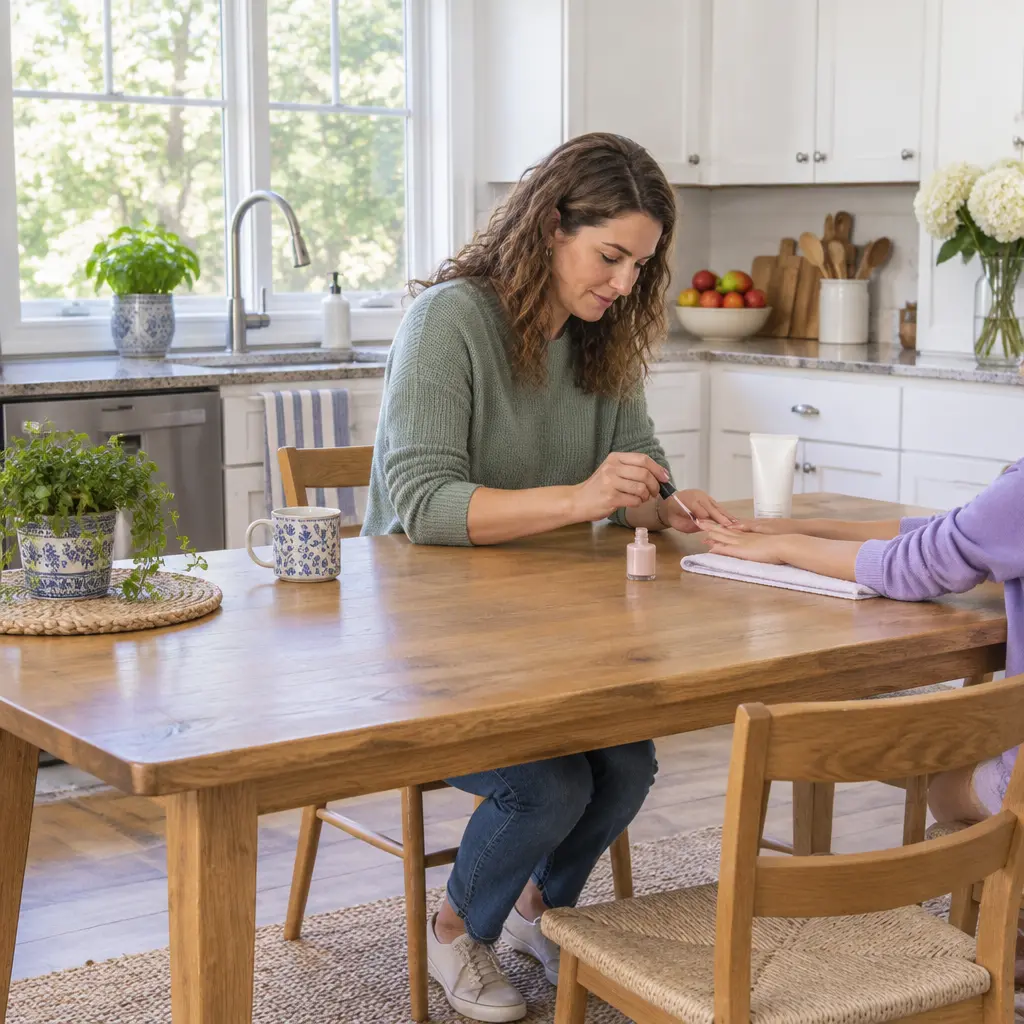
Children’s nails can become dry, brittle, discolored, or irritated after polish use, although these changes can have causes other than polish. Nail polish, removers, and nail-preparation products may contribute to surface damage or skin reactions, especially with frequent use, peeling or scraping polish off, or contact with the surrounding skin. The American Academy of Dermatology (AAD) advises giving nails a break from polish when they are brittle or splitting. This guide explains the signs to watch for, how damage differs from an allergy or infection, and when to seek medical advice.
Nail Polish Damage Signs in a Child’s Nails
“Nail polish damage” is a practical description, not a single medical diagnosis. It refers to changes in the nail plate or nearby skin that may occur after exposure to polish, remover, adhesives, or manicure practices. The nail plate is made largely of keratin, and repeated wetting, drying, abrasion, or chemical exposure can make its surface appear rough or its edges more likely to split. The AAD describes brittle nails as nails that split, peel, or break easily and recommends reducing exposure to drying products and avoiding picking at them.
A child’s nails grow gradually, so a mark caused by a temporary exposure may remain visible until the affected portion grows out. Appearance alone cannot confirm the cause: trauma, eczema, fungal infection, and other skin or health conditions can produce similar changes. Nail polish is therefore one possible contributor—not a diagnosis.
White patches, yellowing, or surface dullness
White spots or patches can appear after minor trauma to the nail, and they are not automatically evidence of a calcium deficiency or polish damage. Polish staining may leave a yellowish or discolored appearance, particularly after darker colors, while a rough or dull surface may follow repeated buffing or scraping. If discoloration persists after polish has been removed and the nail has had time to grow, spreads, thickens, or affects several nails, ask a clinician to assess it rather than assuming polish is the cause.
Peeling, splitting, and brittle edges
Peeling at the tips, vertical splitting, and nails that break more easily are common signs of brittleness. Repeated cycles of polish application and removal, frequent contact with water, and pulling off polish can weaken or lift superficial layers of the nail. The AAD recommends keeping brittle nails protected and limiting activities that repeatedly wet and dry them. Do not peel or scrape polish from a child’s nails; remove it gently according to the product directions and supervise the process.
Redness, itching, swelling, or blisters around the nail
Inflamed skin around the nail is different from simple nail-plate staining. Redness, itching, swelling, or small blisters may signal irritation or allergic contact dermatitis from a polish ingredient or another manicure product. The American Academy of Dermatology notes that nail-product allergies can affect skin beyond the fingertips, including areas a child touches, such as the face or eyelids. Stop using the suspected product and seek medical advice if symptoms are significant, recurring, or spreading.
How Nail Polish and Removal Practices Affect Children’s Nails
Polish-related nail changes can result from the product itself, the remover, or the way a manicure is done. These causes overlap, so a useful first step is to note what was applied, when symptoms appeared, whether polish was peeled or scraped, and whether the surrounding skin is affected. A short break from cosmetic products can help avoid further exposure, but it does not replace medical assessment when a nail looks infected or persistently abnormal.
Repeated polish and remover exposure
Removers—particularly those containing acetone—can dry the nail and surrounding skin. Frequent removal and reapplication may add to dryness and brittleness. The AAD’s general nail-care guidance recommends limiting harsh exposure and taking breaks from polish when nails are brittle or splitting. There is no single evidence-based number of polish applications that is safe for every child; age, skin sensitivity, product ingredients, and frequency all matter.
Peeling, scraping, and aggressive nail preparation
Picking, biting, forcefully scraping polish, or aggressively buffing the nail can remove or roughen layers of the nail plate. Artificial or gel nail systems may also require preparation and removal steps that are more demanding than ordinary polish. Avoid cutting or pushing back the cuticles, which help protect the area where the nail grows, and do not let a child use salon tools unsupervised.
Allergy and product safety are separate concerns
A product may cause a skin allergy even when the nail plate itself appears mostly unchanged. Some nail-product ingredients, including certain acrylates used in artificial or gel systems, are known contact allergens. The U.S. Food and Drug Administration regulates cosmetics and advises consumers to follow product labeling and discontinue use if an adverse reaction occurs. Keep polish and remover away from a child’s mouth and eyes, use products with adult supervision in a well-ventilated area, and store them securely. “Child-friendly” labeling does not guarantee that a product cannot irritate or trigger an allergy.
What to Do and When to Seek Care
For mild dryness or surface changes without pain or inflammation, stop polish and other nail cosmetics temporarily, avoid picking or scraping, and keep the nails comfortably short. A gentle moisturizer can be applied to the surrounding skin. Take a clear photograph and note when the change began; this can help a pediatrician or dermatologist compare progress as the nail grows.
Signs that need medical assessment
Contact a healthcare professional if a nail is painful, increasingly red or swollen, warm, draining pus, separating from the nail bed, or changing progressively. Seek advice for persistent discoloration, thickening, repeated splitting, or changes affecting multiple nails, as well as any suspected allergic reaction. Fever, rapidly spreading redness, severe pain, or a child who appears unwell warrants prompt medical attention. A clinician can distinguish polish-related effects from infection, injury, eczema, or another cause.
A practical prevention checklist
- Use polish occasionally rather than continuously, and pause if nails become brittle or irritated.
- Choose simple products, follow the label, and stop use if a reaction develops.
- Remove polish gently; do not peel, bite, or scrape it off.
- Avoid cutting cuticles, aggressive buffing, and unsupervised artificial or gel nail applications.
- Keep remover and polish away from children’s eyes and mouths, and store them out of reach.
- Ask a pediatrician or dermatologist about changes that persist, worsen, hurt, or involve the surrounding skin.
Conclusion: Protecting a Child’s Nail Health
White or yellow discoloration, dullness, peeling, splitting, brittleness, and inflamed skin around the nail are signs to notice after polish use—but none proves polish caused the problem. Repeated exposure, harsh removal, and product allergy are possible contributors, while trauma and medical conditions can look similar. Give irritated nails a break, avoid peeling or scraping, and seek professional advice for pain, swelling, drainage, persistent changes, or a spreading rash. Careful product use and early attention to symptoms can help protect a child’s nails and skin.
Sources: American Academy of Dermatology Association, “Brittle nails: Self-care,” https://www.aad.org/public/everyday-care/nail-care-secrets/basics/brittle-nails; American Academy of Dermatology Association, “Nail care secrets,” https://www.aad.org/public/everyday-care/nail-care-secrets; American Academy of Dermatology Association, “Nail cosmetics and contact dermatitis,” https://www.aad.org/public/diseases/eczema/types/contact-dermatitis/nail-products; U.S. Food and Drug Administration, “Nail Care Products,” https://www.fda.gov/cosmetics/cosmetic-products/nail-care-products