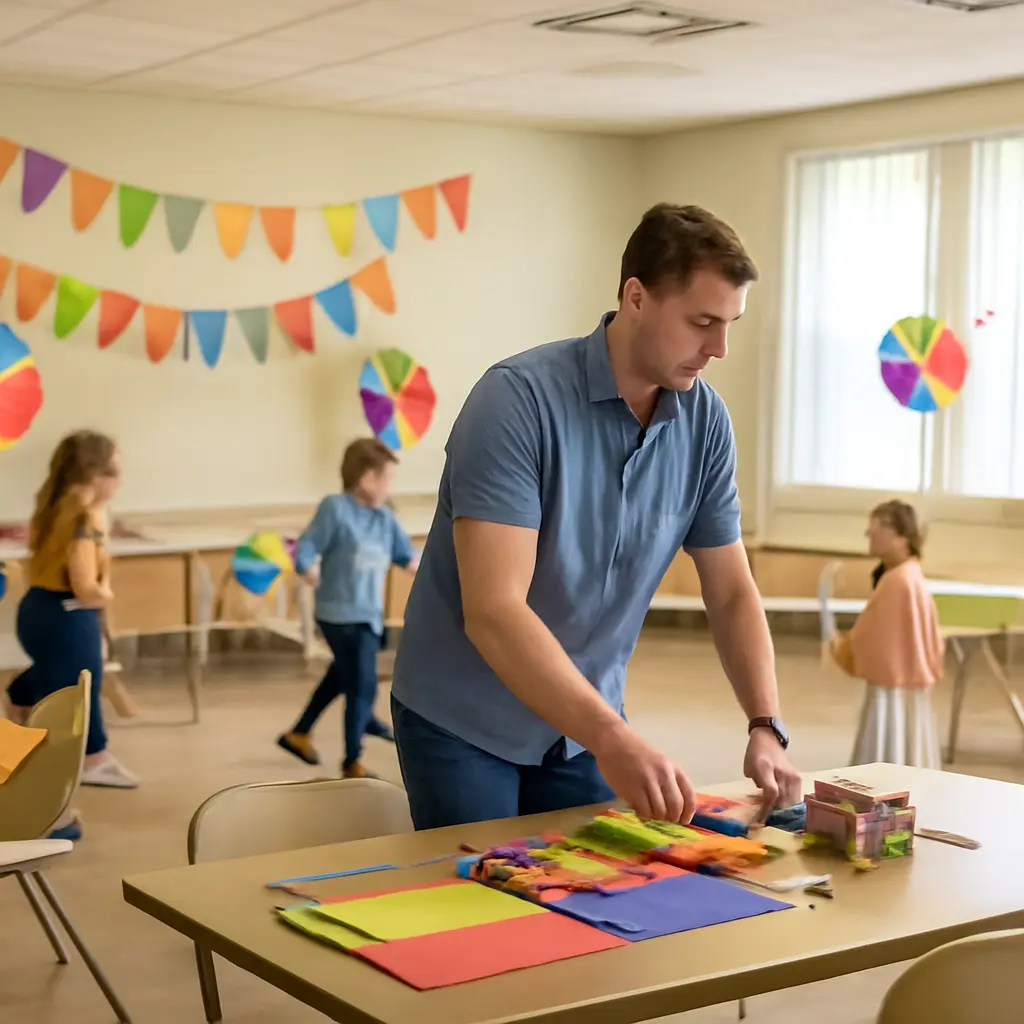
A birthday party that keeps children engaged for hours is built around a simple idea: give them a mix of active play, creative choices, food, and time to reset. The American Academy of Pediatrics recommends that children get at least 60 minutes of physical activity daily, and a well-paced party can contribute to that movement while making room for imaginative and social play. From scavenger hunts and obstacle courses to craft stations and low-pressure games, the best plan matches activities to guests’ ages, interests, space, and energy levels.
How Activity Variety Keeps Children Entertained at Birthday Parties
Activity variety means offering different kinds of play—such as movement, problem-solving, creativity, and cooperative games—rather than expecting one attraction to hold every child’s attention for the whole event. The National Association for the Education of Young Children (NAEYC) describes play as an important context for children’s learning and development, including social interaction, exploration, and problem-solving. For party planning, the practical takeaway is to rotate activities and provide choices: children can join in, pause, or move to another station.
A useful party plan combines high-energy activities with calmer options. Scavenger hunts, relay races, and dancing get children moving; crafts and building challenges give them a change of pace. A snack break, free play, and time for the cake or birthday ceremony help prevent the schedule from feeling like a string of demands. The sections below group these ideas by the kind of engagement they offer.
Active games and movement challenges
Active games are structured play activities that invite children to move their bodies, follow simple rules, and take turns. Try a ribbon-wand dance break, an indoor or outdoor obstacle course, a beanbag target toss, or a “find the color” dash. Keep rules short and adapt the challenge to the available space; for younger children, use soft equipment and avoid games that depend on elimination, which can leave some guests sitting out.
The Centers for Disease Control and Prevention (CDC) recommends that children ages 3 through 5 be physically active throughout the day, while children and adolescents ages 6 through 17 should get at least 60 minutes of moderate-to-vigorous physical activity daily. A party is not a substitute for regular activity, but movement games can be a lively way to build it into the celebration. Plan a quieter activity afterward so children can shift gears.
Scavenger hunts and mission-based play
A scavenger hunt is a search game in which participants look for objects, clues, or answers within set boundaries. Its adaptable format works for many ages: toddlers can find picture cards, while older children can solve riddles or follow a simple map. A themed “rescue mission,” nature search, or party-color hunt gives the activity a story without requiring complicated materials.
For a mixed-age group, pair children or offer clues at different difficulty levels. Use pictures for early readers, keep the search area visible to supervising adults, and make the goal cooperative—for example, finding all the clues together—rather than a race with only one winner. This lets children participate at different speeds and gives the game a natural ending.
Creative stations and hands-on projects
A creative station is a prepared area where children can make, build, decorate, or experiment with materials. Examples include decorating paper crowns, assembling simple bead patterns, designing a greeting card for the birthday child, or building towers with blocks. Set out a clear example, limit the number of materials, and make the project optional so that children can choose how long to stay.
NAEYC’s guidance on play-based learning emphasizes opportunities for children to explore and make choices. A craft table can support that kind of open-ended engagement, but it does not need to become a formal lesson. Choose age-appropriate supplies, check for allergy or choking risks, and use washable materials when possible. A take-home creation also gives guests a party favor they made themselves.
How a Birthday Party Schedule Sustains Children’s Attention
A party schedule is a flexible sequence of activities, food, and breaks that helps hosts manage transitions without overplanning every minute. The aim is not to keep children constantly occupied; it is to offer an inviting next option when one activity winds down. A simple plan also helps adults prepare supplies and identify when supervision is most important.
For a two- to three-hour gathering, alternate active and calm experiences, allow time for arrivals, and leave room for the group’s pace. The following schedule is a starting point, not a rule: adjust it for the children’s ages, the venue, and the birthday child’s preferences.
A sample two-and-a-half-hour party flow
A balanced schedule gives children time to settle in before the main activities and avoids placing every exciting moment back-to-back. For example:
- Arrival and free-choice play: 20 minutes.
- Group game or scavenger hunt: 25 minutes.
- Snack and water break: 20 minutes.
- Craft or building station: 25 minutes.
- Outdoor play, dancing, or a second movement game: 25 minutes.
- Cake, birthday song, and gift time if planned: 25 minutes.
- Calm choices and departures: 10 minutes.
The schedule can change in response to the group. If children are deeply engaged in building, allow a little more time; if a game has lost momentum, move on. A visible picture schedule can help younger guests understand what comes next, while a simple verbal reminder gives everyone time to finish.
Transitions, breaks, and quiet options
A transition is the shift from one activity to another. Children often move more smoothly when they receive a short warning, such as “Five more minutes, then we’ll have snacks,” and when the next activity is already ready. Keep a quiet corner available with books, drawing materials, or sensory-friendly toys for anyone who needs a pause from noise or group play.
Breaks are useful for more than eating. They give children time to drink water, cool down, and reconnect with an adult. The CDC notes that physical activity can be accumulated throughout the day, so a party does not need to rely on one long, intense game. Short bursts of movement separated by calmer periods can suit a wider range of ages and energy levels.
How Age, Inclusion, and Safety Shape Birthday Party Ideas
Age-appropriate party planning means matching the activity’s rules, duration, materials, and physical demands to the children attending. It also means considering access needs, sensory preferences, dietary restrictions, and the setting. These choices make an activity easier to join and safer to supervise—especially when guests have different abilities or developmental stages.
Choose activities by developmental stage
For preschoolers, use short, repeatable activities with simple instructions: bubbles, picture hunts, play dough, or a follow-the-leader parade. Elementary-age children may enjoy team puzzles, themed challenges, craft projects, and games with a few clear rules. Older children often appreciate more autonomy, such as a DIY photo booth, a collaborative mystery, a cooking or decorating station, or a tournament where participants can choose their level of involvement.
These are planning guides, not fixed developmental rules. Ask the birthday child what sounds fun, and consider the actual guest list rather than assuming everyone of the same age enjoys the same things. Offer an alternative for children who do not want to perform, compete, or join a noisy group activity.
Make participation welcoming and flexible
Inclusive party activities provide more than one way to take part. A relay can have walking and running options; a craft can be completed independently or with help; and a team hunt can include picture clues, spoken clues, or a partner. Let guests know in advance about loud music, outdoor conditions, food, and the planned activities so families can share relevant needs.
Avoid making a child’s participation the price of admission to the fun. Provide noncompetitive roles, such as clue reader, scorekeeper, or supply helper, and let children step away when they need to. This approach also helps shy guests and children who are still warming up to a group.
Plan for supervision, food, and the venue
Safe party planning starts with a venue that fits the activities and the number and ages of guests. Remove trip hazards, define boundaries for outdoor play, use equipment as intended, and make sure adults know who is supervising each area. For food, ask caregivers about allergies and dietary needs ahead of time, label dishes where practical, and keep age-appropriate choking hazards in mind for younger children.
The CDC identifies choking as a significant concern for young children and advises caregivers to choose foods suited to a child’s developmental ability. When in doubt, ask families about safe foods and follow their guidance. Keep water available during active play and plan an indoor alternative if weather or the venue changes.
Conclusion: Build a Party Around Choice, Rhythm, and Play
Birthday parties keep children engaged for longer when they combine movement games, scavenger hunts, creative stations, free choice, and well-timed breaks. A flexible schedule gives the event shape, while age-aware, inclusive activities make it easier for different children to join in at their own pace. Start with the birthday child’s interests, prepare a few simple options, and leave room to adapt when the group’s energy changes.
Before the celebration, check the venue, confirm dietary and access needs with families, and gather supplies for both active and quiet play. A thoughtful mix—not an expensive attraction or an overpacked timetable—is what turns a party into a memorable experience. For further guidance, consult the CDC’s child physical activity recommendations and NAEYC’s resources on play-based learning.
Sources: Centers for Disease Control and Prevention, “Physical Activity Guidelines for School-Aged Children and Adolescents,” https://www.cdc.gov/physical-activity-basics/guidelines/children.html; Centers for Disease Control and Prevention, “Childhood Physical Activity,” https://www.cdc.gov/physical-activity-basics/guidelines/children.html; Centers for Disease Control and Prevention, “Choking Hazards,” https://www.cdc.gov/infant-toddler-nutrition/foods-and-drinks/choking-hazards.html; National Association for the Education of Young Children, “The Power of Play: A Research Summary on Play and Learning,” https://www.naeyc.org/resources/topics/play.