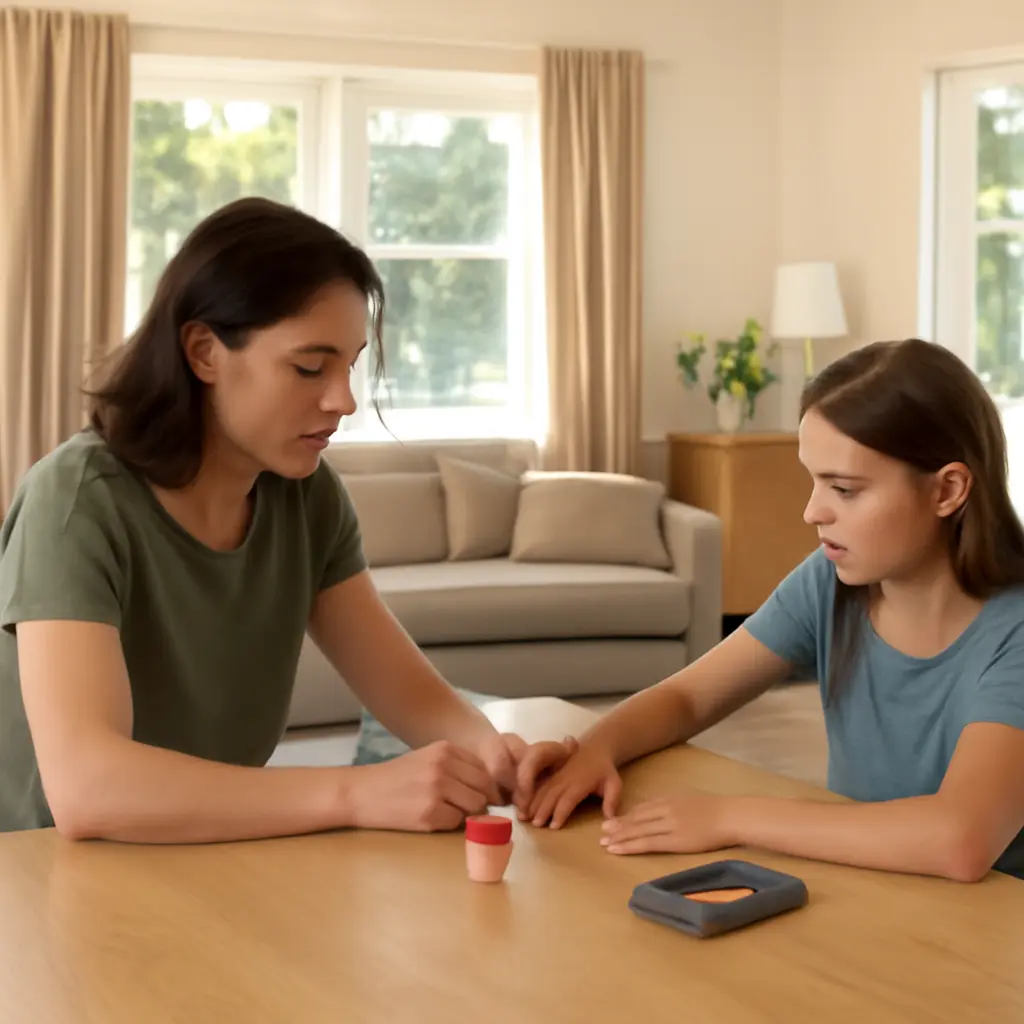
Nail polish for kids is not simply adult polish in smaller bottles or brighter colors: it is a product category shaped by children’s habits, exposure, and need for adult supervision. The real reason kids may need different nail products is that they are more likely to bite or suck their fingers, get polish on their skin, or handle products without understanding the risks. The American Academy of Pediatrics advises keeping nail products away from children and using them with good ventilation; the U.S. Poison Control Centers also warn that nail products can cause harm if swallowed or misused. Choosing a child-oriented formula can reduce some avoidable concerns, but labels such as “non-toxic,” “water-based,” or “peel-off” are not guarantees of safety. Ingredients, age guidance, application, storage, and supervision all matter.
Why children’s nail polish products need different safety attributes
A child-appropriate nail product is one selected and used with children’s behavior and exposure in mind—not a product that is automatically harmless because it is marketed to children. The U.S. Food and Drug Administration (FDA) explains that cosmetics, including nail polish, generally do not receive FDA premarket approval, except for most color additives. Manufacturers are responsible for ensuring product safety and proper labeling. That makes it important for caregivers to assess the ingredients, directions, and practical risks rather than relying on packaging claims alone.
The relevant product types include conventional solvent-based polish, water-based polish, peel-off polish, and nail stickers or press-ons. They differ in ingredients and in how they are applied or removed, but none eliminates every risk. For example, water-based products may reduce exposure to some volatile solvents, while stickers avoid liquid polish during application; stickers and press-ons can still become choking hazards for young children.
Children’s exposure patterns change the risk
Exposure means contact with a product through the skin, eyes, breathing, or swallowing. Young children may touch wet polish, rub their eyes, or put coated fingers in their mouths. The National Capital Poison Center notes that swallowing nail polish can cause irritation and other symptoms, while larger exposures or inhalation of product vapors may require prompt advice from a poison center. These risks depend on the formula, amount, and circumstances; “made for kids” does not remove the need to keep products out of reach.
Product claims are not the same as safety standards
Terms such as “3-free,” “5-free,” “non-toxic,” and “hypoallergenic” may describe a brand’s formulation or marketing approach, but they do not establish that a product is risk-free for every child. The FDA advises consumers to read cosmetic labels and follow directions, and it cautions that people can react to cosmetic ingredients even when a product is widely used. A child with eczema, sensitive skin, or a history of allergy may need extra caution and a clinician’s advice.
How child-oriented nail polish attributes affect product choice
The most useful attributes to compare are formula, application method, removal method, age guidance, and packaging. No single attribute determines whether a product is appropriate. A caregiver should consider the child’s age and tendency to mouth objects, use the product only as directed, and supervise application and removal.
Water-based formulas and solvent exposure
Water-based nail polish uses water as a major part of its liquid base, although the exact ingredients vary by brand. Traditional polish commonly contains volatile solvents that help it spread and dry. The U.S. Environmental Protection Agency describes volatile organic compounds (VOCs) as compounds that can evaporate into the air; some VOCs can affect indoor air quality and health, depending on the substance and exposure. Using polish in a well-ventilated room and following the label reduces avoidable vapor exposure. Water-based does not mean edible, non-irritating, or suitable for every child.
Peel-off polish and removal-related trade-offs
Peel-off polish is designed to lift from the nail, often without conventional remover. This can be convenient, but children may pick at or swallow flakes, and forceful peeling can irritate or damage the nail surface. The American Academy of Dermatology Association notes that nail products and manicure practices can contribute to nail irritation or damage. Caregivers should remove polish gently according to the manufacturer’s directions and stop using it if redness, itching, swelling, or pain appears.
Stickers, press-ons, and small-part hazards
Nail stickers and press-on decorations avoid brushing liquid polish onto the nail, but they introduce different concerns. Small pieces may be swallowed or inhaled, particularly by toddlers and preschoolers, and adhesives can irritate skin. The U.S. Consumer Product Safety Commission identifies small parts as a choking risk for children under three. Keep loose decorations away from young children, follow any age warnings, and do not use a product if a child is likely to pull it off and put it in their mouth.
How to use children’s nail products more safely
Safer use depends as much on routine as on the product itself. A practical approach is to have an adult apply and remove polish, choose a ventilated area, prevent contact with eyes and mouth, and store the bottle and accessories securely. If a child has a reaction, stop using the product and seek medical advice when symptoms are significant or persistent.
A caregiver’s product-check routine
- Read the full ingredient list, age guidance, warnings, and application and removal instructions.
- Use only a small amount, with an adult applying the product and supervising until it is fully dry.
- Choose a well-ventilated space and keep polish, remover, stickers, and press-ons away from food and children’s reach.
- Avoid applying polish to broken, inflamed, or irritated skin or nails.
- Stop use if irritation develops; contact a healthcare professional or poison center for exposure concerns.
What to do after accidental exposure
If polish or remover gets into a child’s eyes or is swallowed, follow the product label’s first-aid instructions and contact a poison center for case-specific guidance. In the United States, Poison Control can be reached at 1-800-222-1222. For severe symptoms, breathing difficulty, or an emergency, call emergency services. Do not induce vomiting unless a qualified professional specifically tells you to do so.
Conclusion: choose children’s nail products around real-world use
Children may need different nail polish products because their behavior and exposure patterns differ from adults’, not because any product labeled for kids is automatically safe. Formula, ventilation, removal, age suitability, small parts, and supervision all affect the practical risk. Compare labels carefully, use products only as directed, and keep them secured after use. For further guidance, consult the FDA’s cosmetics information, the American Academy of Pediatrics, and Poison Control; seek professional advice if a child has a reaction or accidental exposure.
Sources: U.S. Food and Drug Administration, “Cosmetics: Hair, Nail, and Makeup Products,” https://www.fda.gov/cosmetics/cosmetic-products/hair-nail-and-makeup-products; U.S. Food and Drug Administration, “FDA Authority Over Cosmetics: How Cosmetics Are Not FDA-Approved, but Are FDA-Regulated,” https://www.fda.gov/cosmetics/cosmetics-laws-regulations/fda-authority-over-cosmetics-how-cosmetics-are-not-fda-approved-are-fda-regulated; National Capital Poison Center, “Nail Polish,” https://www.poison.org/articles/nail-polish; U.S. Environmental Protection Agency, “Volatile Organic Compounds’ Impact on Indoor Air Quality,” https://www.epa.gov/indoor-air-quality-iaq/volatile-organic-compounds-impact-indoor-air-quality; American Academy of Dermatology Association, “Gel manicures: Tips for healthy nails,” https://www.aad.org/public/everyday-care/nail-care-secrets/basics/gel-manicures; U.S. Consumer Product Safety Commission, “Small Parts,” https://www.cpsc.gov/Business–Manufacturing/Business-Education/Business-Guidance/Small-Parts; Poison Control, “Contact Poison Control,” https://www.poison.org/contact-us.