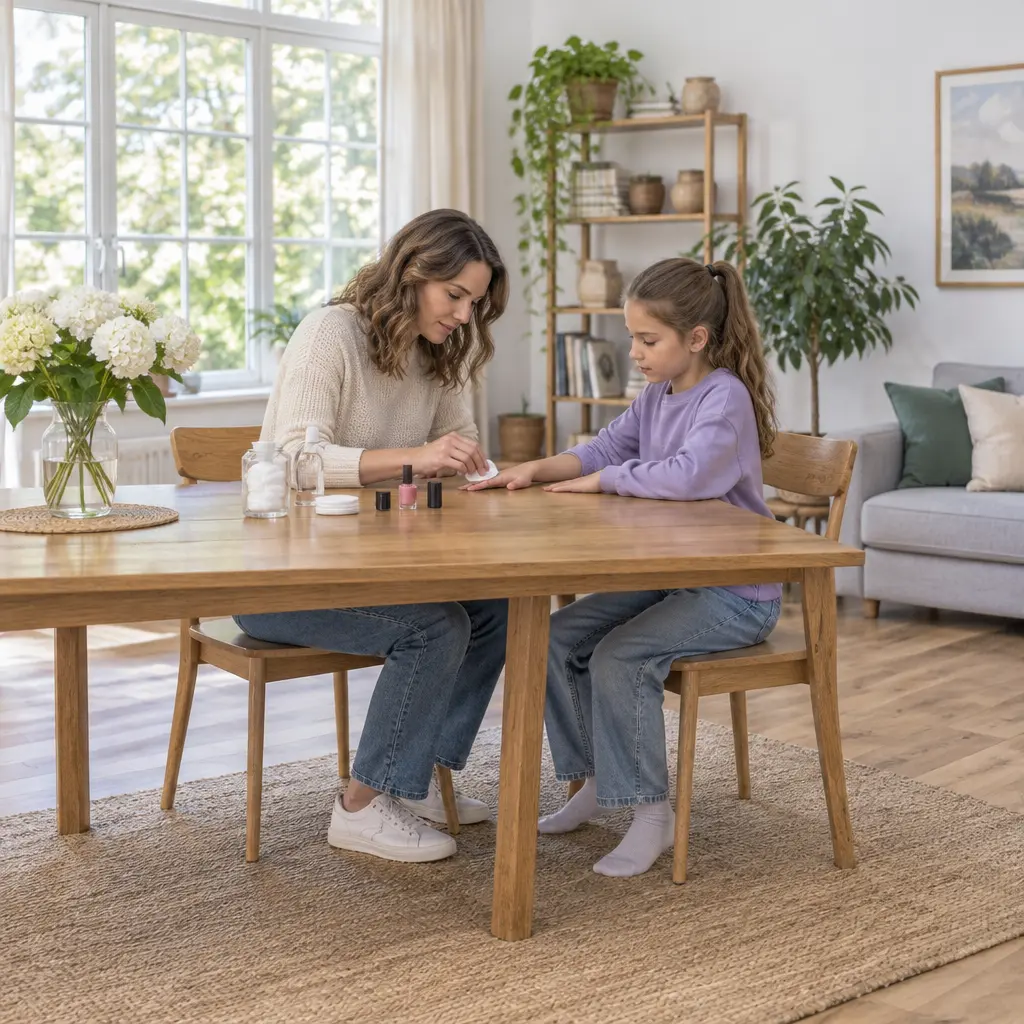
Children’s nail polish can usually be removed gently with soap and water if it is water-based; conventional polish generally comes off with a small amount of nail-polish remover used carefully by an adult. The safest approach depends on the product label, the child’s age and skin sensitivity, and whether the polish is on natural nails or artificial nails. Poison Control and pediatric guidance emphasize preventing swallowing, eye exposure, and prolonged skin contact with remover. This guide explains how to identify the polish, choose a removal method, use remover cautiously, respond to accidental exposure, and know when to seek medical advice.
Safe removal methods for children’s nail polish
Safe removal means reducing exposure to solvents while removing the polish without scraping, biting, or damaging the nail and surrounding skin. The American Academy of Dermatology advises avoiding harsh nail practices that can irritate or injure skin and nails. For children, the key distinction is whether the polish is water-based or a conventional solvent-based product: water-based polish may wash or peel away, while conventional polish usually requires remover.
Check the polish label first
Water-based children’s polish is formulated to come off more readily with water, soap, or peeling, though products vary. Read the packaging rather than assuming a polish marketed to children is non-toxic or removable without solvents. Conventional polish commonly contains film-forming ingredients and solvents, so washing alone may not remove it. Gel, shellac, and artificial-nail products are different: they can require prolonged acetone exposure, filing, or professional removal and are not good candidates for improvised removal on a child.
Start with the gentlest option
For water-based polish, soak the nails briefly in warm—not hot—soapy water, then wipe gently with a soft cloth. If the polish is designed to peel, lift only an edge that comes away easily; do not force or scrape it. For regular polish, a remover labeled for nail polish may be needed. “Acetone-free” does not mean harmless: these removers may contain other solvents that can irritate skin or eyes. Use the smallest amount that works and stop if the child reports stinging or the skin becomes red.
Avoid picking, biting, and abrasive removal
Do not use teeth, sharp tools, or aggressive filing to remove polish. Picking can tear the nail’s surface or the skin around it, creating soreness and an entry point for infection. If the polish will not come off with gentle methods, check whether it is gel or another long-wear coating and ask a pediatrician or qualified nail professional about an age-appropriate option.
Using nail-polish remover safely around children
Nail-polish removers are chemical mixtures, often containing acetone or other solvents. The National Capital Poison Center notes that acetone exposure can irritate the eyes, skin, and respiratory tract; swallowing it can cause harmful effects. These risks make adult supervision, ventilation, and careful storage essential. There is no universal amount or method that is safe for every child, so follow the product label and avoid use if the child is likely to put fingers in their mouth or cannot sit still.
Adult-supervised removal steps
- Choose a well-ventilated room and keep the bottle away from the child’s reach.
- Have the child sit still, with hands positioned away from the face. An adult should handle the remover.
- Dampen a cotton pad with a small amount; do not pour remover onto the child’s fingers or soak the fingertips.
- Wipe the nail gently, keeping the product off the skin as much as possible. Avoid broken or irritated skin.
- Wash the hands with soap and water afterward, then close and store the bottle securely.
Ventilation, skin care, and flammability
Use remover away from flames, cigarettes, heaters, and other ignition sources because many solvent-based products are flammable. Keep the child from breathing directly over the bottle or cotton pad. If remover dries the surrounding skin, rinse the area and apply a small amount of fragrance-free moisturizer once it is clean. Avoid using remover on cuts, rashes, or inflamed skin, and do not mix it with other cleaning products.
Why gel polish needs extra caution
Gel polish is designed to resist ordinary wiping and may need acetone soaking or filing. Those procedures can expose skin to solvent for longer and may damage a child’s nail if performed roughly. Do not pry off gel or use powered filing tools at home. If a child has gel polish, seek advice from a pediatrician or a reputable professional experienced with safe removal; for a young child, allowing the coating to grow out may be preferable if it is not causing a problem.
Accidental exposure and when to seek help
Most small amounts of remover on intact skin can be washed off, but symptoms and the amount of exposure matter. Poison Control recommends contacting an expert for individualized advice after a possible poisoning rather than waiting for symptoms. In the United States, call Poison Control at 1-800-222-1222; call emergency services for severe symptoms such as trouble breathing, collapse, or loss of consciousness. Outside the United States, contact the local poison center or emergency service.
If remover gets on skin or in the eyes
For skin contact, remove contaminated clothing if needed and rinse the area thoroughly with lukewarm running water. If the skin remains painful, red, or blistered, contact a healthcare professional. If remover gets in the eyes, begin flushing with clean, lukewarm water and continue for 15 to 20 minutes; seek poison-center or medical guidance, especially if pain, redness, or blurred vision persists.
If a child swallows remover
Do not induce vomiting. Wipe away any product from the mouth, do not give food or drink unless a poison specialist directs you, and contact Poison Control or the local poison center promptly. Keep the product container available so the specialist can identify its ingredients. Drowsiness, vomiting, dizziness, or breathing problems warrant urgent medical advice; severe symptoms require emergency services.
Watch for nail or skin irritation
Stop removal if the child develops burning, swelling, a rash, or significant pain. Seek medical advice if irritation does not improve after rinsing, if the nail or surrounding skin is injured, or if signs of infection—such as increasing redness, warmth, swelling, or drainage—appear. A clinician can also advise whether a reaction may be related to polish ingredients rather than the remover.
Conclusion: gentle removal and prevention
The safest way to remove children’s nail polish is to identify the product, begin with the gentlest method, and use solvent-based remover only in a small amount under adult supervision. Water-based polish may come off with soap and water, while conventional polish may require remover; gel coatings should not be scraped or forced off. Good ventilation, secure storage, handwashing, and prompt response to accidental exposure help reduce risk. Check product labels, keep removers out of children’s reach, and contact a poison center or healthcare professional whenever exposure or symptoms raise concern.
Sources: National Capital Poison Center, “Nail Polish Remover,” https://www.poison.org/articles/nail-polish-remover; Poison Control, “Get help online or by phone,” https://www.poison.org/; American Academy of Dermatology Association, “Nail care secrets,” https://www.aad.org/public/everyday-care/nail-care-secrets; MedlinePlus, “Nail polish poisoning,” https://medlineplus.gov/ency/article/002722.htm