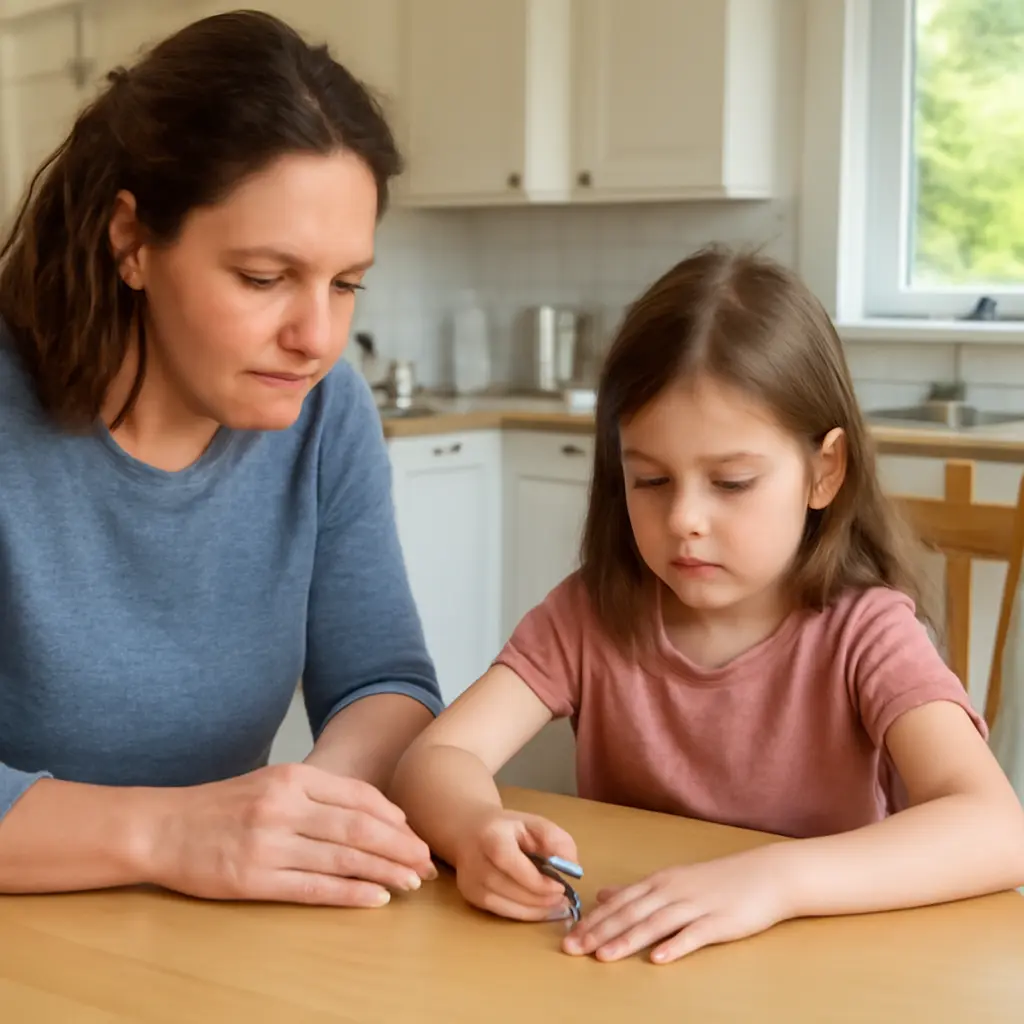
Painting a five-year-old’s nails is generally a low-risk cosmetic activity, and pediatricians do not typically recommend a blanket ban. Their practical advice is to supervise closely, keep polish and removers away from children’s mouths and eyes, and choose safer products where possible. The main concerns are accidental ingestion, skin or eye irritation, fumes in poorly ventilated spaces, and choking hazards—not that an occasional manicure is inherently harmful. Because there is little research specifically on nail polish use in five-year-olds, guidance comes from poison-control and pediatric safety principles, product ingredients, and advice about children’s developing habits.
Pediatrician guidance on painting nails at age five
There is no widely recognized American Academy of Pediatrics rule that says a five-year-old may or may not wear nail polish. In routine practice, pediatricians generally treat it as a family choice when the child is well, the product is used as directed, and an adult manages the application. The American Academy of Pediatrics’ HealthyChildren.org emphasizes keeping potentially poisonous household products, including cosmetics, out of children’s reach and following label directions.
The relevant distinction is between supervised use on intact nails and a child handling polish independently. Nail products are not intended to be swallowed, inhaled deliberately, or applied to irritated skin. The U.S. Food and Drug Administration (FDA) also advises consumers to use cosmetics according to their labeling and to stop using a product if it causes a reaction.
Occasional polish versus independent use
Occasional polish applied by an adult is different from giving a five-year-old a bottle to use alone. A child this age may touch wet polish, rub their eyes, or put fingers in their mouth before the product dries. Keep the bottle closed between uses, supervise throughout, and store it where children cannot reach it afterward.
What pediatric guidance does—and does not—say
Pediatric safety guidance supports prevention of exposure and prompt action after an accidental ingestion; it does not establish a universal age threshold for nail polish. There are also no robust statistics showing how often ordinary nail-polish use causes harm specifically in five-year-olds. That uncertainty is a reason to use straightforward precautions rather than to assume either that every product is harmless or that all polish is dangerous.
Nail polish risks and safer application
Nail polish is a mixture of film-forming ingredients, pigments, and solvents. The exact formula varies by product. For a child, the most immediate risks are usually accidental exposure and irritation; the risk depends on the product, amount, route of exposure, and ventilation. A label claim such as “non-toxic” does not mean a product is edible or safe to swallow.
Ingestion and poison-control response
Small children may bite polished nails or accidentally taste liquid polish. If a child swallows any amount, contact Poison Control in the United States at 1-800-222-1222 for case-specific advice; do not induce vomiting unless a medical professional instructs you to. Call emergency services for trouble breathing, severe sleepiness, seizures, or another urgent symptom. The Poison Control service advises callers based on the substance and exposure, so keep the container available when calling.
Skin, eye, and nail irritation
Some people develop irritation or allergic contact dermatitis from cosmetic ingredients. Avoid painting cuticles, broken skin, or nails affected by redness, swelling, pain, or suspected infection. Stop using the product and wash the area if a rash or burning develops; seek medical advice for persistent or severe symptoms. The FDA notes that cosmetics can cause allergic reactions and recommends discontinuing a product that produces an adverse reaction.
Fumes, ventilation, and removers
Use polish in a well-ventilated room and avoid letting a child hover over the open bottle. Nail-polish remover, commonly containing acetone or other solvents, can irritate eyes and skin and is harmful if swallowed. Keep remover capped and out of reach, use only a small amount under adult control, and wash hands afterward. Do not use polish or remover near flames, since many formulations are flammable.
Choosing products and setting age-appropriate boundaries
Product choices can reduce avoidable exposure, but ingredient marketing should be interpreted carefully. FDA cosmetic rules require safety substantiation by the responsible company, while the agency does not approve most cosmetics before they reach the market. A product’s “free-from” claims are not a guarantee that it cannot irritate a child or cause an allergic reaction.
Water-based and “free-from” formulations
Water-based polish may have less solvent odor than conventional polish, but it is still a cosmetic and should not be swallowed. Claims such as “3-free” or “10-free” refer to the exclusion of selected ingredients, and the exact meaning can vary among brands. Read the ingredient list and age guidance, use products from reputable sellers, and do not rely on a marketing label as a substitute for supervision.
A practical, child-safe routine
A simple routine is to apply polish at a table with an adult present, keep the child’s hands still until the polish is dry, and put every bottle and remover away immediately. Avoid decorative pieces that could detach and become choking hazards. If the child frequently bites their nails or puts fingers in their mouth, consider skipping polish or choosing a non-paint activity until that behavior is less frequent.
When to ask the child’s clinician
Ask a pediatrician if the child has eczema, known fragrance or cosmetic allergies, recurring nail problems, or a reaction after use. A clinician can help distinguish irritation from allergy and advise whether to avoid particular products. Seek urgent help for breathing difficulty, facial swelling, or a serious exposure; for possible poisoning in the United States, contact Poison Control promptly.
Conclusion: a supervised choice, not a medical milestone
For most healthy five-year-olds, occasional nail painting is a family decision rather than a pediatric prohibition. The sound advice is to supervise application, use ventilation, keep polish and remover out of reach, avoid irritated skin, and respond promptly to ingestion or a reaction. Since direct research on this specific age group is limited, parents should focus on established exposure-prevention guidance and ask their child’s clinician about individual allergies or health concerns.
For further guidance, consult your pediatrician, the FDA’s cosmetics safety information, or Poison Control. In the United States, save the Poison Control number—1-800-222-1222—in your phone before an accident happens.
Sources: American Academy of Pediatrics, “Household Safety: Poisoning Prevention and Treatment,” HealthyChildren.org, https://www.healthychildren.org/English/safety-prevention/all-around/Pages/Poison-Prevention.aspx; U.S. Food and Drug Administration, “Cosmetics: Safety Information,” https://www.fda.gov/cosmetics/cosmetics-science-research/cosmetics-safety-information; U.S. Food and Drug Administration, “Using Cosmetics,” https://www.fda.gov/cosmetics/cosmetics-labeling/using-cosmetics; Poison Control, “Nail Polish,” https://www.poison.org/articles/nail-polish; Poison Control, “Contact Us,” https://www.poison.org/contact-us.