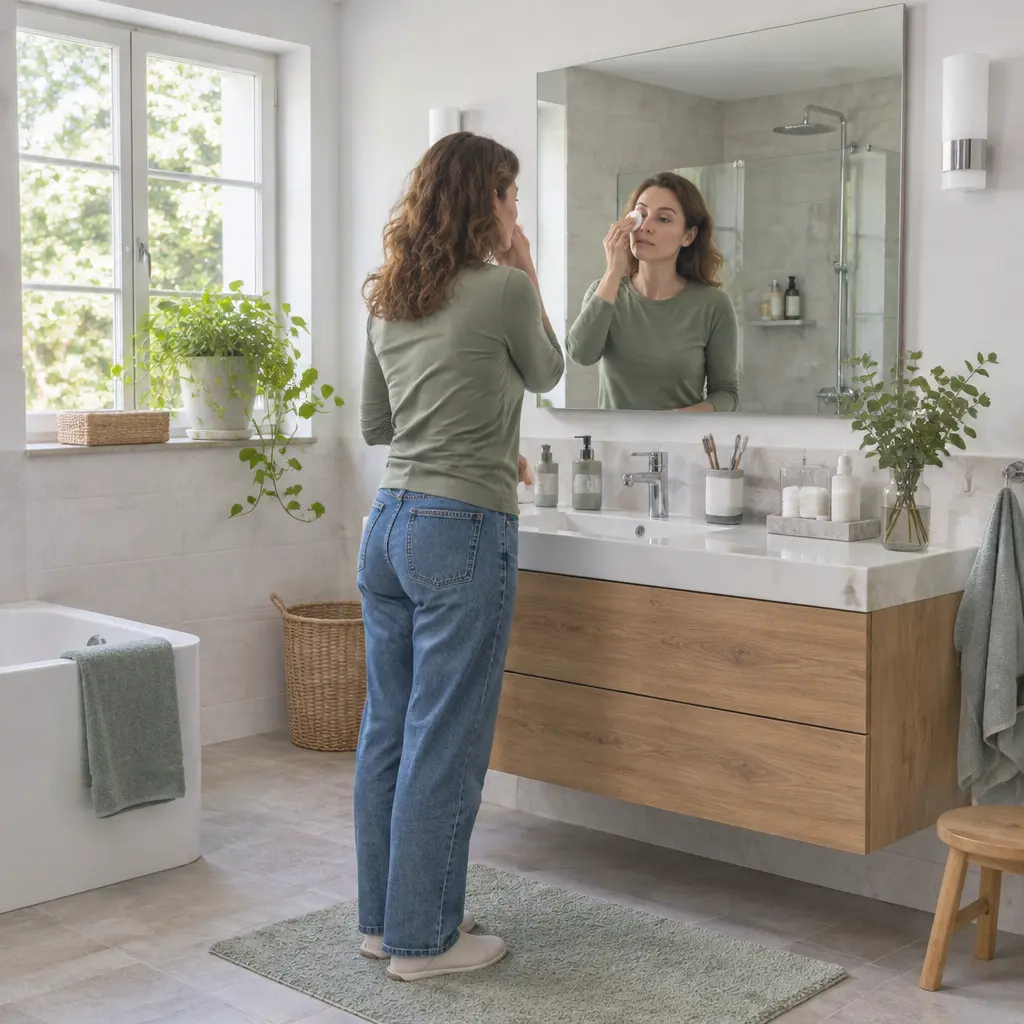
Water-based formulas are products that use water as a primary carrier or continuous phase; in cosmetics, examples include water-based mascara, eyeliner, and face products. Their performance challenge is balancing two competing needs: a formula should resist routine moisture, friction, and wear long enough to work as intended, yet come off without excessive rubbing or harsh removers. That balance depends on the product’s polymers, film formation, pigments, surfactants, application conditions, and the user’s removal method—not simply on whether water is listed first. The discussion below distinguishes water-based from water-removable, explains how film-forming chemistry and testing shape wear, and offers practical ways to assess removal and performance together.
Water-based formula performance: what the attribute means
A water-based formula is generally one in which water is the main solvent or forms the continuous phase. The term describes composition, not a guarantee that the finished product will dissolve in water or wash away easily. The U.S. Food and Drug Administration’s cosmetic labeling guidance treats ingredient declarations as a way to identify formula components; a product’s ingredient list alone does not establish how it will wear or how readily it can be removed.
For performance purposes, the relevant attribute is the formula’s ability to deliver usable wear while remaining removable under suitable conditions. In cosmetics, that may mean a mascara resists smudging through the day but releases with warm water, or that a water-based eyeliner stays in place through ordinary wear but comes off with cleanser. These outcomes depend on the complete formula and the test conditions. “Water-based,” “water-resistant,” “washable,” and “water-removable” are related but distinct claims.
Water-based does not mean water-soluble
Water-soluble ingredients dissolve in water; water-based products may also contain dispersed polymers, waxes, oils, pigments, or other materials that do not. A formula can therefore have water as its main carrier while leaving a durable film after the water evaporates. The European Commission’s CosIng ingredient database and cosmetic ingredient labeling practices describe substances by identity and function, but the presence of water in a formula does not by itself predict the behavior of the finished product.
Hyponyms: washable, water-resistant, and tubing formulas
“Washable” commonly describes a product intended to come off with water or ordinary cleansing, while “water-resistant” indicates greater resistance to water exposure. “Tubing” mascara is a consumer term for formulas that form polymer sleeves around lashes and can often be released with warm water and gentle pressure. These categories overlap: a tubing mascara may be water-based, but not every water-based mascara forms tubes, and not every washable product performs identically in tears, rain, or humid conditions. Claims should be judged against the manufacturer’s directions and the conditions in which the product is used.
Film formation controls water-based formula wear time
Film formation is the process by which dispersed ingredients leave a coherent layer as a product dries. In many water-based cosmetics, polymers bind pigments and other solids to the skin, hair, or lashes; water evaporates, and the remaining film provides color, adhesion, flexibility, or resistance. Cosmetic science references such as the Handbook of Cosmetic Science and Technology describe film-forming polymers as important tools for modifying feel, adhesion, and durability in personal-care products.
Polymer choice and film flexibility
Film-forming polymers differ in flexibility, tack, water sensitivity, and adhesion. A flexible film may move with skin or lashes and reduce cracking; a more water-sensitive film may be easier to remove but more vulnerable to sweat or tears. Formulators often combine polymers, plasticizing agents, waxes, or other components to tune the balance. The result is a system-level property: changing one ingredient can affect drying, comfort, pigment hold, transfer, and removal at once.
Drying time, application, and environmental conditions
Wear begins with application and drying. Applying a thick layer, layering before the first coat sets, or exposing the product to moisture before it dries can disrupt film formation and contribute to smudging or flaking. Temperature, humidity, skin oils, and friction also influence real-world performance. Accordingly, a laboratory wear result cannot be assumed to predict every user’s experience unless the test conditions and product-use instructions are known.
Pigments, waxes, and supporting ingredients
Pigments provide color but must be dispersed and held in place. Waxes and emollients can improve glide, body, and film structure; surfactants and stabilizers help maintain a uniform mixture. These ingredients can also influence how a dried product responds to water, cleanser, and rubbing. The practical implication is that two products labeled water-based can have very different wear and removal profiles because their full formulas—and not just their water content—differ.
Water-based formula removal depends on the removal mechanism
Removal is the release of the dried product from the surface it coats. Water alone may be sufficient for some formulas, while others need surfactants, oils, or a dedicated remover to loosen the film. A product may also be designed to release through a specific mechanism: dissolving, swelling, emulsifying, or physically sliding away in sections. The method recommended by the manufacturer is therefore part of the product’s performance specification.
Surfactant cleansing and water-assisted removal
Surfactants help water wet surfaces and lift oily soil and residues into a rinseable mixture. A gentle cleanser may remove a less resistant water-based product, but a durable polymer film can require longer contact or a purpose-designed remover. The American Academy of Dermatology advises gentle cleansing and cautions against aggressive scrubbing, particularly around sensitive skin. For eye-area products, follow the label, avoid getting cleanser in the eyes, and stop use if irritation occurs.
Warm-water release and tubing products
Some tubing-style products are designed to release when warm water hydrates or loosens the polymer film, allowing the tubes to slide from lashes with gentle pressure. This differs from dissolving the pigment into the water. A user may see small pieces coming away rather than a colored rinse. That behavior can make removal straightforward, but the claim is specific to the formula: warm-water removal should not be assumed for every water-based mascara or eyeliner.
Why rubbing is a poor substitute for suitable removal
Repeated rubbing can irritate skin and may pull at lashes or disturb the skin barrier. The American Academy of Ophthalmology recommends care when removing eye makeup and emphasizes avoiding unnecessary irritation around the eyes. A better approach is to use the recommended remover, allow it to contact the product briefly when directed, and wipe gently without scraping. If a formula consistently requires force, that is a practical sign that its removal method may not suit the user’s routine.
Testing water-based formula wear and removal together
A balanced evaluation measures both how long the product performs and how it comes off. Wear testing can assess transfer, smudging, flaking, color loss, or film breakdown over a defined period. Removal testing can record the cleanser or water conditions, contact time, number of wipes, and visible residue. The International Organization for Standardization’s ISO 24444 provides a standardized method for determining sunscreen sun protection factor, illustrating a broader principle: performance claims are meaningful only when the test method and conditions are specified. It is not, however, a general standard for mascara or eyeliner wear.
Define the use case before comparing products
A useful comparison starts by specifying the intended use: daily office wear, exercise, humid weather, sensitive-skin routines, or a quick evening cleanse. Then compare products under similar conditions and follow each label’s directions. A formula that resists sweat may be a better choice for a long day, while a washable formula may be preferable when easy nightly removal is the priority. No single product attribute guarantees suitability for every user.
A practical wear-and-removal scorecard
A simple scorecard can make trade-offs visible without implying laboratory precision. Record wear duration, transfer or smudging, comfort, removal time, cleanser used, and whether rubbing was needed. Keep application amount and environmental conditions as consistent as possible. A chart could plot wear time on one axis and removal effort on the other, with separate markers for comfort or residue; this makes clear that the “best” formula is the one that meets the user’s minimum wear needs without imposing unacceptable removal effort.
- Apply the product as directed and allow it to dry fully.
- Check wear at consistent intervals and note transfer, flaking, or discomfort.
- Use the labeled removal method and record contact time and effort.
- Stop testing if irritation, pain, or an adverse reaction occurs.
Choosing a water-based formula for real-world use
Selection should match the user’s wear demands and removal preferences. For everyday wear, prioritize clear instructions, comfortable application, and removal with a cleanser already used safely. For water exposure, look for an explicitly stated water-resistance claim rather than inferring it from the phrase “water-based.” For sensitive areas, consider fragrance and other personal triggers, follow label warnings, and discontinue use if a reaction develops. The FDA notes that cosmetics are not generally subject to premarket approval, apart from color additives and certain other requirements, so consumers should pay attention to labeling and report adverse reactions.
Case example: daily mascara versus water-resistant wear
Consider two hypothetical mascaras. Formula A is designed for routine cleansing and comes off with a gentle wash, but may smudge during a wet workout. Formula B is designed to resist moisture and may hold up better during exercise, but requires a dedicated remover and more contact time. Neither is inherently superior: the appropriate choice depends on whether the user values easy removal or resistance to moisture for that particular occasion. This example also shows why “water-based” alone is an insufficient purchasing criterion.
Read claims as specific performance promises
Terms such as “long-wear,” “smudge-resistant,” “waterproof,” and “easy to remove” refer to different outcomes. Look for the conditions attached to the claim and the removal directions on the package. When no testing details are supplied, treat marketing language as a guide rather than a universal guarantee. The most useful decision is a personal one supported by a small, consistent trial—not a conclusion drawn solely from the product’s water-based label.
Conclusion: balance water-based formula wear with easy removal
Water-based formula performance is shaped by film formation, polymers, pigments, supporting ingredients, application, and the conditions of use. Water-based does not automatically mean water-soluble, washable, or resistant to moisture. Wear time and removal effort should therefore be assessed together: a durable film may serve a long-wear need, while a more readily released film may better suit a simple daily routine. Check product directions, compare performance under consistent conditions, and use gentle removal rather than force. For further evaluation, record wear and removal results across a few uses and discuss persistent irritation with a qualified health professional.
Sources: U.S. Food and Drug Administration, Cosmetics Labeling Guide, https://www.fda.gov/cosmetics/cosmetics-labeling-regulations/cosmetics-labeling-guide; European Commission, CosIng—Cosmetic Ingredients Database, https://single-market-economy.ec.europa.eu/sectors/cosmetics/cosmetic-ingredient-database_en; Barel, André O., Marc Paye, and Howard I. Maibach, editors, Handbook of Cosmetic Science and Technology, 4th edition, CRC Press, https://www.routledge.com/Handbook-of-Cosmetic-Science-and-Technology/Barel-Paye-Maibach/p/book/9781842145647; American Academy of Dermatology, Face Washing 101, https://www.aad.org/public/everyday-care/skin-care-basics/care/ face-washing-101; American Academy of Ophthalmology, How to Remove Eye Makeup Safely, https://www.aao.org/eye-health/tips-prevention/removing-eye-makeup; International Organization for Standardization, ISO 24444:2019 Cosmetics—Sun Protection Test Methods—In Vivo Determination of the Sun Protection Factor (SPF), https://www.iso.org/standard/72250.html.