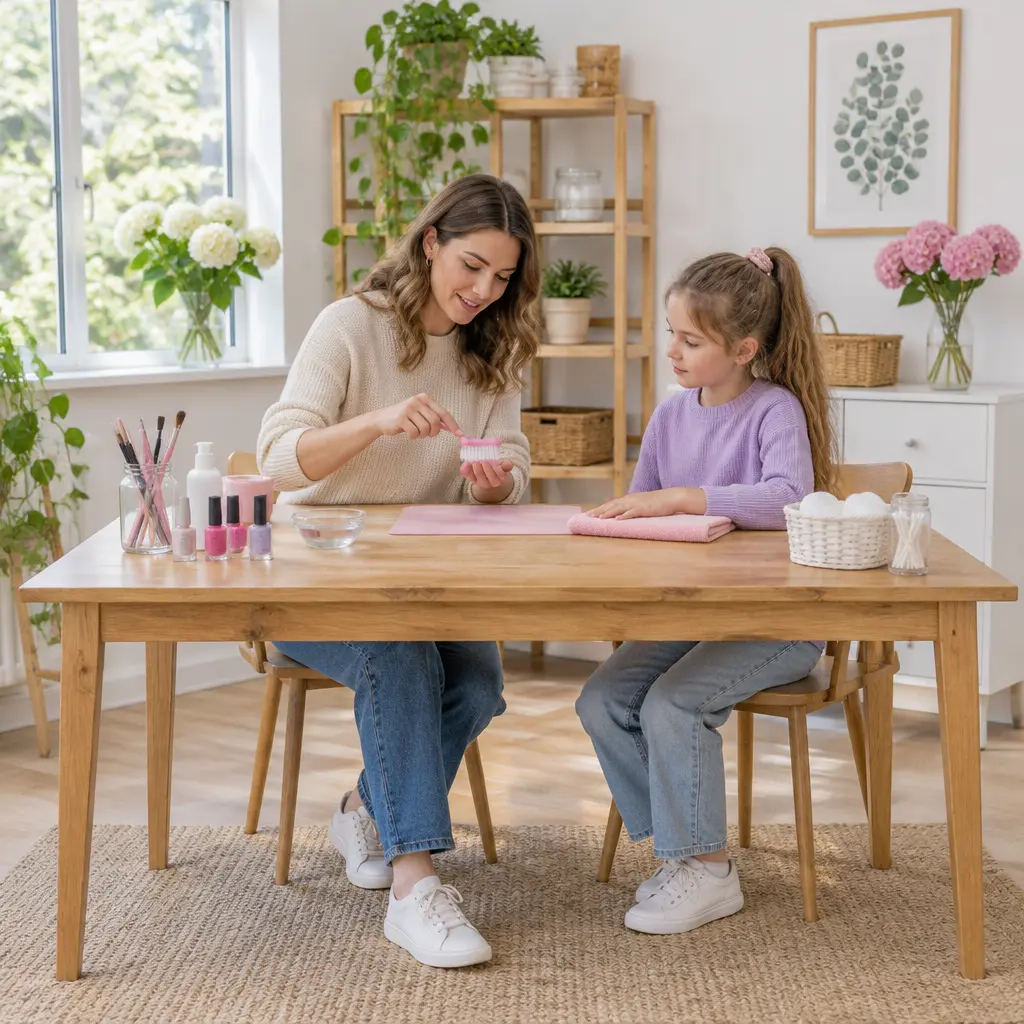
A child-friendly nail brush is a small, easy-to-control polish brush designed to help younger users apply color without flooding the cuticle—the thin protective skin at the base of the nail. Mastering the technique matters because polish on surrounding skin can make a manicure look untidy and, if it remains in contact with skin, may contribute to irritation or allergic sensitization. The practical solution is to use a small amount of polish, stabilize the hand, leave a narrow gap around the cuticle, and clean mistakes before they cure. This guide explains brush control, age-appropriate supervision, safe product use, and a simple practice routine; it also distinguishes practical coaching from medical advice.
Brush Control and Cuticle Flooding Prevention
“Cuticle flooding” is a salon and nail-care term for polish spreading onto the cuticle area or adjacent skin. The cuticle is the thin layer of dead tissue attached to the nail plate near its base; the proximal nail fold is the living skin bordering that area. The American Academy of Dermatology (AAD) advises people not to cut or force back cuticles because they help protect the nail root from infection. For application, that protective role makes keeping polish on the nail plate—not on surrounding skin—a useful hygiene and technique goal.
There is no standard clinical measurement for how often polish flooding happens, and brush manufacturers do not use one universal definition of “child-friendly.” The most reliable guidance is therefore practical: prioritize a brush that the child can hold steadily, use minimal polish, and have an adult supervise. Nail cosmetics are not toys, and children should not ingest them or use them without appropriate adult oversight.
What makes a brush child-friendly?
A child-friendly brush is one whose handle and bristles allow controlled, comfortable strokes for the user. Shorter, grippy handles may be easier for small hands to stabilize, while a narrow, moderately flexible brush can help limit the amount of polish delivered near the nail edges. These are design considerations, not regulated product categories: check the manufacturer’s age guidance, the product label, and whether the child can grip the brush without touching the wet bristles.
The brush should be neither overloaded nor completely dry. Wipe one side lightly against the bottle’s neck, keeping a small bead on the other side. If the brush is so wide that its bristles touch both sidewalls when placed on the nail, use a lighter touch or choose a narrower applicator. A parent can test the brush on a practice surface before using it on a child’s nails.
Why polish floods the cuticle
Flooding commonly results from excess polish, pressure that fans the bristles outward, starting the stroke too close to the skin, or moving the finger while the brush is in contact with the nail. Thick or fast-drying formulas can also be harder for beginners to maneuver. These factors are practical observations rather than quantified clinical risk estimates; slowing down and reducing the polish load addresses several of them at once.
A useful visual target is a slim, unpainted margin between the polish and the surrounding skin. The exact gap varies with nail size and brush shape. Trying to paint right up to the skin is unnecessary: a slightly narrower coat is easier to control and can still look neat.
Application Technique for Small Hands
Good application combines hand positioning, a small polish load, and deliberate strokes. The bridge from brush selection to technique is simple: even an easy-to-hold brush can flood the cuticle if the finger moves or the brush is pressed too hard. Set up the work area first, then apply polish only when both the child and supervising adult can remain focused.
Prepare a stable, child-safe workspace
Have the child sit at a table with the forearm supported and the hand resting flat on a washable surface. Place a towel or disposable barrier underneath, keep the bottle upright, and work in a well-ventilated area. Close the bottle between nails when practical, and keep polish, remover, cotton pads, and small tools out of reach when they are not being used. Follow the product label and adult-supervision instructions; do not apply cosmetics to broken or irritated skin.
Choose a time when the child can sit still. For very young children, an adult should apply the polish rather than handing over the bottle. If the child resists, becomes restless, or puts fingers near the mouth, stop and try another time. A safe, calm session is more important than completing every nail.
Use the three-stroke method
The three-stroke method divides the nail into a center strip and two side strips. It reduces repeated brushing and gives the user a clear route away from the cuticle.
- Wipe excess polish from one side of the brush and keep a small bead on the other.
- Place the brush slightly above the nail’s base, leaving a narrow margin before the cuticle. Let the bristles fan gently; do not push them into the skin.
- Pull one smooth stroke toward the tip along the center of the nail.
- Make one stroke down each side, stopping short of the side skin. Use less pressure than a beginner may expect.
- Let the first coat settle before considering a second coat, following the polish label’s drying directions.
On a small nail, the side strokes may be unnecessary. One carefully centered stroke can be cleaner than trying to cover the full nail in one pass. Never scrape the brush against the skin to remove excess polish.
Stabilize the finger and brush
An adult can gently support the child’s finger from underneath, holding it steady without squeezing. The child can rest the painting hand on the table and use the other hand only to position the finger. Short strokes are easier to control than long, fast movements, especially when the nail is small or curved.
If the brush repeatedly touches the skin, pause instead of adding more polish. Wipe the brush, reposition the hand, and begin again with a smaller amount. This correction is more effective than trying to spread a puddle after it has reached the cuticle.
Cleanup, Product Safety, and Supervision
Even careful application can leave a small mark on the skin. Immediate, gentle cleanup prevents the mistake from becoming part of the finished manicure and reinforces the distinction between the nail plate and surrounding skin. For children, supervision and label-following are central: polish and remover are chemical products, not play materials.
Correct a small spill before it dries
If polish touches the skin, stop painting and use a cotton swab or small cleanup brush lightly dampened with an age-appropriate remover, if the product label permits its use. Keep remover away from the eyes, mouth, broken skin, and flames, and have an adult handle it. Do not push a sharp tool under the cuticle or scrape the nail fold. If the polish has already dried, avoid picking at the skin; follow the remover label or leave the mark alone if removal would irritate the area.
For sensitive skin, a cautious approach is especially important. The U.S. Food and Drug Administration (FDA) notes that nail products can cause harmful effects when misused and advises consumers to follow product directions and precautions. Stop using a product if redness, itching, swelling, or discomfort occurs, and seek medical advice if symptoms are significant or persistent.
Choose products with supervision in mind
Read the full ingredient and warning information where available, use products only as directed, and store them securely after use. “Water-based,” “non-toxic,” or “child-friendly” marketing language does not mean a product is edible or suitable for every child. Avoid letting children bite or peel polish, and do not use nail products on nails or skin that appear infected or damaged.
The AAD also cautions that nail cosmetics can trigger allergic reactions in some people, including reactions around the fingers or other areas touched by the hands. Keeping polish off the skin is therefore a sensible precaution, but it cannot guarantee that an allergy will not occur. If a reaction develops, discontinue the product and consult a qualified healthcare professional.
Practice without rushing
A practice routine can build coordination without turning a manicure into a test. An adult can first demonstrate on their own nail or on a washable practice surface, then guide the child through holding the brush, wiping excess, and making a slow stroke. Praise steady movement and careful stopping rather than demanding perfect coverage.
- Start with one nail so the child can learn the brush’s feel.
- Use a small amount of polish and pause if the brush begins to drag.
- Keep a cotton swab nearby for adult-led cleanup.
- Allow drying time according to the product directions before the child resumes play.
- Stop if the child becomes uncomfortable or cannot keep hands away from the face.
Conclusion: Make Control More Important Than Coverage
Preventing cuticle flooding with a child-friendly brush depends less on a special product claim than on controlled technique. Choose a brush the child can hold, support the hand, use a small polish bead, leave a narrow margin around the cuticle, and clean accidental contact gently. Adult supervision, label-directed use, ventilation, and secure storage help keep the activity appropriate for children.
Treat each application as a short practice in steadiness, not a demand for salon-perfect coverage. Review the AAD and FDA guidance for further nail-care and cosmetic-safety information, and consult a healthcare professional if irritation or an allergic reaction appears.
Sources: American Academy of Dermatology, How to trim your nails, https://www.aad.org/public/everyday-care/skin-care-basics/nails/healthy-nail-tips; American Academy of Dermatology, Nail care secrets, https://www.aad.org/public/everyday-care/skin-care-basics/nails/care; U.S. Food and Drug Administration, Nail Care Products, https://www.fda.gov/cosmetics/cosmetic-products/nail-care-products