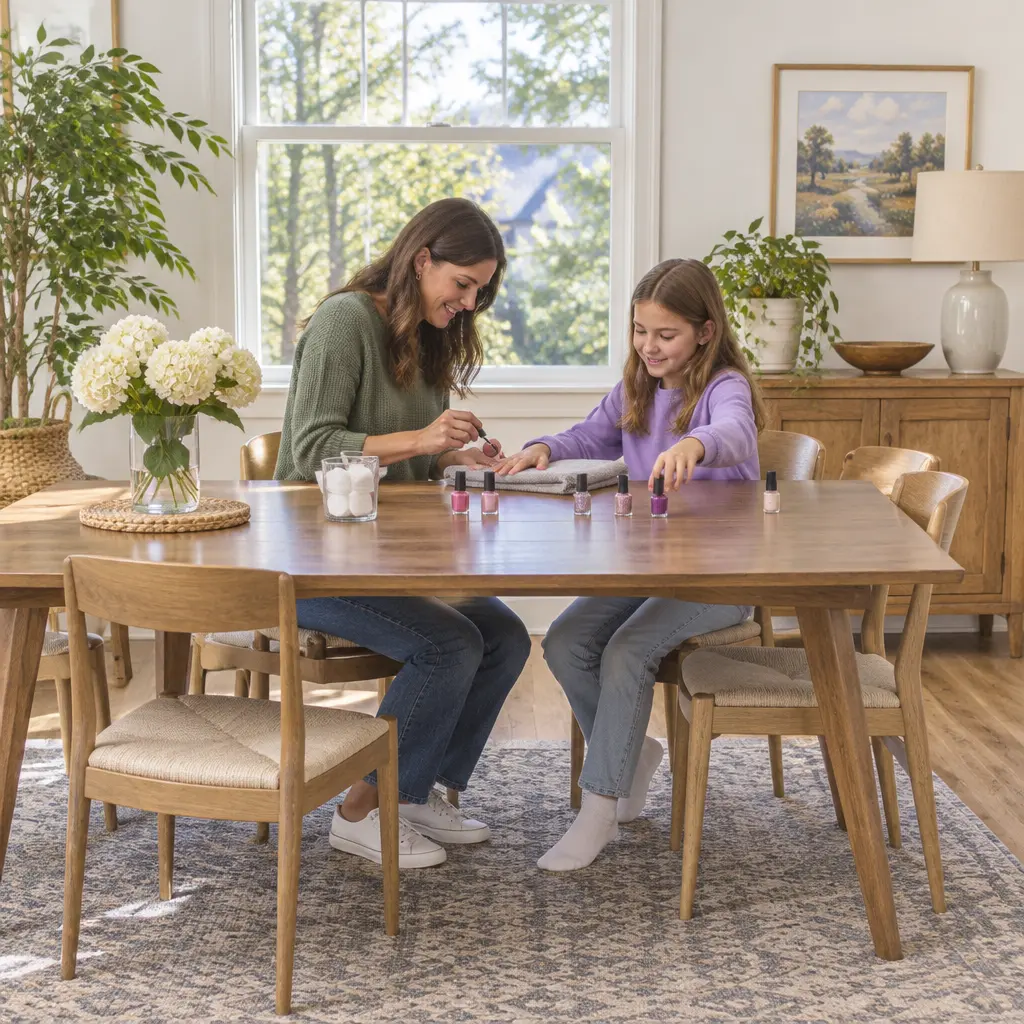
DIY manicure bonding turns ordinary nail care into a low-pressure parent-child ritual: a chance to talk, share attention, and practice gentle self-care together. A manicure is cosmetic care for nails and surrounding skin; it is not a proven treatment for stress or a substitute for meaningful conversation. Still, the American Academy of Pediatrics emphasizes that warm, responsive interactions support children’s social and emotional development, while research on shared family activities suggests that predictable, enjoyable time together can strengthen connection. The safest approach is simple: choose age-appropriate, non-toxic products, keep tools clean, let the child lead where possible, and make conversation—not perfect polish—the point.
Build parent-child connection through a DIY manicure bonding ritual
A parent-child manicure ritual is a brief, shared activity in which an adult and child care for or decorate nails while giving one another focused attention. It can include washing hands, choosing a color, applying polish, or simply shaping and moisturizing nails. These are different forms of the same activity, ranging from polish-free nail care to a decorative manicure. Its value lies less in the finished nails than in the predictable sequence: time together, a child’s choices being heard, and calm, attentive interaction.
This matters because connection is built through repeated everyday exchanges, not only through major family events. The American Academy of Pediatrics describes responsive, supportive relationships as important to children’s development. A manicure cannot guarantee a particular developmental outcome, but a relaxed, screen-free routine can create an easy opening for conversation and shared enjoyment. In the sections below, we look at the bonding features, age-appropriate ways to participate, practical safety, and how to keep the ritual welcoming rather than perfection-focused.
Define the parent-child manicure bonding attribute
The defining attribute of manicure bonding is shared, responsive attention: the adult and child participate together, with the child’s comfort, preferences, and ability guiding the activity. The American Academy of Pediatrics’ guidance on positive parent-child interaction stresses listening, responding, and showing interest in a child’s experiences. Applied to nail care, that means asking whether the child wants polish, respecting a “no,” and treating conversation or quiet companionship as equally successful outcomes.
Related forms include a polish-free hand-care session, a simple child-led color choice, and a pretend salon game using safe, clean tools. These variations make the activity adaptable for different ages, sensory preferences, and family routines. A child who dislikes the smell or feel of polish can still join by choosing a hand cream, selecting a parent’s color, or helping set out towels.
Shared attention and conversation
Shared attention means that both people focus on the same activity while staying attentive to one another. During a manicure, a parent might ask open questions such as, “What was the best part of your day?” or “Would you like to choose the color?” The aim is not to turn the session into an interview. Pauses, jokes, and comfortable silence all count as connection when the child feels safe and included.
The U.S. Surgeon General’s advisory on social connection identifies supportive relationships as relevant to health and well-being across life. That broad evidence does not establish manicure sessions as a specific intervention; rather, it provides context for why small, dependable moments of attention can matter. A useful family measure is not how many nails are painted, but whether both participants felt heard and enjoyed the time.
Choice, autonomy, and body respect
A child-centered manicure offers manageable choices without making appearance the measure of success. Let the child decide whether to participate, which safe color to use, or whether to skip polish entirely. Ask permission before touching the child’s hands, and stop if they become uncomfortable. This models bodily autonomy and respect for personal boundaries.
The Centers for Disease Control and Prevention describes positive parenting as nurturing, responsive, and supportive of children’s development. In this setting, that can mean offering choices suited to the child’s age while keeping adult responsibility for product safety and tool handling. Praise creativity, patience, or the fun of spending time together rather than judging nail length, neatness, or color.
Adapt DIY manicure bonding to age and ability
Age-appropriate participation keeps the ritual enjoyable and reduces avoidable risks. Young children can make choices and watch while an adult handles products; older children can take on more steps with supervision. Every child develops differently, so use comfort, coordination, and interest—not age alone—to decide what they can safely do.
Toddlers and preschoolers: keep it sensory-friendly
For very young children, make the activity brief and mostly polish-free. They might choose a towel, point to a color, or apply a child-appropriate hand moisturizer with help. Avoid small pieces that could be swallowed, sharp implements, and products that the child may put in their mouth. If a child dislikes scents, sticky textures, or sitting still, switch to a short hand-washing or hand-massage routine—or end the activity.
School-age children: invite participation with supervision
School-age children may enjoy choosing colors, arranging supplies, or applying polish to their own nails under an adult’s supervision. Keep bottles closed when not in use, protect the work surface, and ensure the room is well ventilated. The U.S. Food and Drug Administration advises consumers to follow cosmetic product directions and use nail products as intended. An adult should handle clippers and other sharp tools, particularly when a child is still learning safe control.
Teens: make room for independence and conversation
For teenagers, a manicure can be a shared activity that respects independence rather than a parent-directed lesson. Ask whether they want company, advice, or simply time to do their nails together. Let them manage their own style choices while discussing product labels, ventilation, and safe handling if useful. A low-pressure invitation is more likely to preserve connection than insisting on a routine the teen does not want.
Protect health and comfort during a family manicure
Safe manicure bonding depends on basic hygiene, appropriate products, and sensible supervision. Nail cosmetics may contain ingredients that irritate skin or eyes, and some products release fumes. The FDA notes that cosmetics must be safe when used as directed and that consumers should follow label warnings. Children should not use adult nail products without an adult reviewing the label and supervising the activity.
Choose products carefully and ventilate the room
Read labels, follow age guidance and warnings, and avoid products that cause irritation or discomfort. Use nail polish and remover in a well-ventilated area, keep them away from flames and heat, and close containers promptly. Do not apply cosmetic products to broken or irritated skin. If a product gets into a child’s eyes or is swallowed, follow the label’s first-aid instructions and contact a medical professional or poison-control service as appropriate.
Keep tools clean and avoid cutting cuticles
Wash hands before and after the session, and clean reusable tools according to their material and product instructions. Do not share tools if someone has a nail or skin infection. The American Academy of Dermatology advises against cutting cuticles because they help protect the nail and surrounding skin from infection. For a family activity, gently pushing cuticles is also unnecessary; focus on comfortable, noninvasive care instead.
Use age-appropriate supervision and stop when needed
Keep polish, remover, and sharp implements out of reach when not in use. An adult should supervise children throughout the activity and handle tools that require precise control. Stop if there is pain, redness, a rash, or distress. Children with known allergies, eczema, or other skin concerns may need advice from a clinician before trying new products.
Create a repeatable ritual without making it a chore
A family ritual is a familiar activity repeated in a way that feels meaningful, not a schedule children must obey. A manicure might happen before a celebration, during a quiet weekend, or whenever both people want a little shared time. Keep the setup simple and let the child’s interest determine the length. A short, enjoyable session is preferable to forcing a complete manicure.
A simple routine families can adapt
- Ask whether the child wants to join and agree on a polish-free or polish option.
- Wash and dry hands, then set out only the supplies needed.
- Let the child choose a color, a hand cream, or another small part of the activity.
- Take turns, chat naturally, or enjoy quiet company without requiring conversation.
- Clean the work area, close products securely, and finish with a positive note about the time together.
Make inclusion and flexibility part of the tradition
Families can adapt the ritual for different abilities, sensory needs, and cultural preferences. Options include no polish, fragrance-free products, painting only one nail, using stickers designed for the child’s age, or choosing a different shared activity altogether. A child who does not want their own nails touched might enjoy painting a parent’s nails or selecting colors. The important attribute is mutual participation—not following a single idea of what a manicure should look like.
Conclusion: let connection be the measure of a DIY manicure
DIY manicure bonding can turn routine nail care into an opportunity for shared attention, child-led choices, and relaxed conversation. The most meaningful features are responsiveness and respect: invite participation, listen to the child, and accept a polish-free session or a decision to stop. Age-appropriate supervision, careful product use, clean tools, and good ventilation help keep the experience comfortable and safe.
Start with a short, simple session and ask afterward what the child enjoyed—or whether they would prefer something different next time. Treat the ritual as one option among many ways to connect, not as a substitute for broader care and communication. For further guidance, consult the American Academy of Pediatrics on positive parent-child relationships, the FDA’s cosmetic safety information, and the American Academy of Dermatology’s nail-care advice.
Sources: American Academy of Pediatrics, “The Importance of Play in Promoting Healthy Child Development and Maintaining Strong Parent-Child Bonds,” https://publications.aap.org/pediatrics/article/119/1/182/70699/The-Importance-of-Play-in-Promoting-Healthy-Child; U.S. Surgeon General, Our Epidemic of Loneliness and Isolation: The U.S. Surgeon General’s Advisory on the Healing Effects of Social Connection and Community, https://www.hhs.gov/sites/default/files/surgeon-general-social-connection-advisory.pdf; Centers for Disease Control and Prevention, Positive Parenting Tips, https://www.cdc.gov/child-development/positive-parenting-tips/index.html; U.S. Food and Drug Administration, Nail Care Products, https://www.fda.gov/cosmetics/cosmetic-products/nail-care-products; American Academy of Dermatology, Nail Care, https://www.aad.org/public/everyday-care/nail-care-secrets/basics/nail-care